Apex Legends ranked is not won by aim alone. Mechanical skill matters, but consistent ranked progression also depends on how quickly and accurately you make decisions. Knowing when to fight, when to rotate, where to land, when to disengage, which enemy to target, when to use an ability, and how much risk to accept can make the difference between a strong ranked game and an early elimination. This becomes even more important as you climb. Lower-ranked lobbies can sometimes be won through raw mechanics, but higher-ranked games increasingly punish unnecessary risks.
BoostingXP offers professional Apex Legends Rank Boost, Pred RP Boost, Predator services, and Pro Play with experienced high-level players. Privacy, safety, and clear results are the priority.
Explore Apex Legends Services Rank Boost Pred RP Boost Predator BoostDecision-Making at a Glance
The goal is not to make every decision perfectly. Even professional players make mistakes and lose fights. The goal is to consistently make decisions that give your squad a better chance of surviving, winning fights, gaining RP, and reaching strong endgame positions. For players aiming at Master or Predator, decision-making becomes one of the most important skills to develop.
What Is Decision-Making in Apex Legends?
Decision-making is the process of evaluating the information around you and choosing the best available action. In Apex Legends that information is constantly changing. You may need to decide where to land, whether to contest, when to rotate, which enemy to target, whether to push after a crack, when to reset, whether to third-party, or whether to play for placement.
A strong player does not simply ask “Can we win this fight?” They also ask “What happens if we lose?” That question is extremely important in ranked.
The Most Important Ranked Decision: Risk vs Reward
Every major action has a potential reward and a potential cost. Winning a fight can provide eliminations, RP, better loot, better armor, better positioning, and more control. Losing the same fight can result in early elimination, lost RP, wasted resources, poor positioning, third-party exposure, or a difficult recovery.
A fight may be mechanically winnable but strategically bad. Before committing to a major fight, consider:
Decision-Making Starts Before the Match
Good ranked decisions begin before you fire your first shot. Your initial landing decision can influence the entire game. Understand your squad’s preferred landing style, the current map, nearby POIs, rotation routes, potential contest locations, ring possibilities, loot availability, and common enemy landing patterns. If your team consistently lands where you can loot efficiently and rotate safely, you start the game with more options.
Choosing a Landing Spot
Your landing location should match your team’s ability and the type of game you want to play. There is no universally perfect landing spot. A player with strong mechanics may deliberately choose a contested POI for early eliminations. Another squad may prefer a quieter location that provides enough loot and allows an early rotation. Both approaches work when they are intentional.
Consider these factors
- Contest risk — How many teams normally land nearby?
- Loot quality — Can your squad realistically obtain weapons, armor, ammunition, and healing?
- Rotation options — Can you leave the POI quickly?
- Ring access — How difficult is it to reach common ring locations?
- Nearby teams — Knowing where enemies land helps you predict early rotations and third parties.
Do Not Make Decisions Based Only on the Ring
The ring matters, but it should not control every decision. Players sometimes rotate immediately whenever they see a distant ring. That can create another problem: moving unnecessarily through dangerous territory. Before rotating, consider where the next ring is, which teams are likely to rotate through the area, what buildings or terrain you can use, whether you are exposed, whether another team is already holding the route, and whether you have enough time to take a better path.
A rotation is not automatically good because it is early. A good rotation improves your future position while managing risk.
Information Is the Foundation of Good Decisions
The better your information, the better your decisions become. Information comes from visual contact, audio, teammate communication, the kill feed, map information, ring position, enemy movement, damage dealt, ability usage, death boxes, recent fights, and known enemy locations. Strong players constantly build a mental picture of the match.
You should know where the enemies are, where another squad could come from, which areas have recently been cleared, which teams have already fought nearby, where the safest rotation is, and where the next fight will probably happen.
Learn to Read the Battlefield
Apex gives you incomplete information. You rarely know exactly where every squad is. Instead, you estimate. If you hear fighting behind you and another squad is already visible ahead, the area is becoming dangerous. If three squads have rotated toward the same side of the ring, blindly following that route may create a difficult situation. Continuously update your assumptions. Do not treat your first assumption as fact.
Fight Selection: The Skill That Saves RP
One of the biggest ranked mistakes is fighting simply because an enemy is nearby. Not every enemy needs to be killed. The correct question is not “Can we fight them?” It is “Is fighting them beneficial right now?”
Before starting a fight, evaluate your position, the enemy’s position, numbers, resources, ring, third-party risk, and exit route. If several of these factors are negative, reconsider the fight.
When You Should Take a Fight
A fight becomes more attractive when you have multiple advantages:
- An enemy is isolated
- One player is significantly damaged
- Your squad has better positioning
- Your team has a numbers advantage
- The enemy is rotating through open terrain
- You have a strong crossfire
- The enemy has limited cover
- Another squad is distracted
- Your team has a safe reset location
- The enemy is separated from their support
The key is to create an advantage before committing.
When You Should Avoid a Fight
Be cautious when your team is split, you lack healing, you have poor weapons, the enemy has strong high ground, you are outside the ring, multiple squads are nearby, your escape route is limited, a teammate is already down, you have no information about surrounding teams, or you are fighting in an exposed area. Avoiding a bad fight is not passive gameplay — it is decision-making.
The Difference Between Playing Safe and Playing Passive
Ranked players sometimes misunderstand safe gameplay. Playing safely does not mean avoiding every fight. A player who never fights will eventually struggle to gain enough eliminations, improve combat ability, or control important areas. Instead, the goal is to take high-quality fights — fights where your squad has a reason to engage, you have an advantage, you understand the surrounding area, you have an exit, and the potential reward justifies the risk.
Good ranked players are not afraid of fighting. They are selective about when they fight. For a complete solo-queue climbing system that pairs with these decisions, see our Solo Queue to Master Ranked Guide.
Damage Does Not Automatically Mean Push
One of the most common decision-making mistakes is treating damage as an automatic signal to push. You crack an enemy and a teammate immediately says “Push!” Before pushing, ask: Where is the enemy? Where are their teammates? Do we have an angle? Is the cracked player actually isolated? Can we close the distance safely? Is our squad healthy? Are other teams nearby?
A cracked enemy is an opportunity. It is not always an instruction to sprint forward. For deeper gunfight execution (cover, angles, trading, and temporary 1v1s), pair this guide with our Fighting Fundamentals guide.
Create Temporary 1v1s
Apex is fundamentally a team game, but fights can often be won by creating temporary one-on-one engagements. Instead of fighting three enemies simultaneously, isolate one player through angles, cover, height, movement, doorways, buildings, rocks, head glitches, abilities, or timing. If three enemies can shoot you at once, even strong mechanics may not save you. If only one enemy can effectively see you, the fight becomes much more manageable. This is one of the foundations of high-level combat decision-making.
Do Not Overextend for a Knock
Getting a knock is a major advantage, but the knock does not guarantee the fight is over. Before pushing, evaluate your health, your teammates’ health, enemy positions, distance, cover, remaining enemy resources, and third-party risk. Sometimes the correct play is to hold the advantage rather than immediately chase another knock. The goal is to convert an advantage into a team wipe — not turn an advantage into a throw.
Know When to Reset
A reset means stopping the immediate engagement so your team can recover. Reset when multiple teammates are weak, shields are broken, ammunition is low, abilities are unavailable, your position has become compromised, the enemy has regained control, a third party is approaching, or your squad needs to heal. A reset can completely change a fight. You may lose a few seconds but regain health, shields, abilities, better positioning, and better timing. Do not confuse retreating from a bad position with losing the fight.
Learn the Art of Disengaging
Disengaging is one of the most valuable ranked skills. Players often continue fighting because they have already invested damage, ammunition, or time. That is a mistake. Previous investment does not make a bad fight better. If the situation changes, change your decision.
Example: You start a fight with a numbers advantage. Then your teammate gets knocked. Another squad appears. The enemy gains high ground. The ring begins closing. Your original plan is now outdated. Leave. Strong players know when the conditions that justified a fight no longer exist.
Third-Party Decision-Making
Third parties are one of the biggest sources of both opportunity and danger. Hearing two squads fight can create a potential opening, but rushing toward every gunshot is not automatically correct. Before third-partying, consider how long they have been fighting, how much damage has likely been dealt, where the teams are, how far away you are, whether you have a safe approach, whether the ring is moving, whether another squad is already approaching, and what happens if the original teams reset.
The best third parties are based on timing and information — not emotion. Do not start a fight between two active teams. If two squads are actively fighting, look for a position where you can observe and wait for an opening. Do not automatically run directly between them. A good third party creates pressure from a controlled angle. For more on third-party timing and power-spot control, see the third-party strategy sections in our How to Reach Apex Predator Ranked Guide.
Rotation Decision-Making
Rotations become increasingly important as the game progresses. A rotation should answer three questions: Where are we going? Why are we going there? What can happen along the way? If you cannot answer these questions, your rotation may be based on instinct rather than information.
Early Rotations vs Late Rotations
Early rotation advantages: more time to establish position, more control over buildings, better opportunity to secure high ground, less pressure from the closing ring. Risks: arriving too early and becoming surrounded, another squad already occupying the area, giving up resources unnecessarily.
Late rotation advantages: more information about enemy locations, other teams may already have moved, you can sometimes follow behind teams. Risks: fewer available positions, greater chance of being held, less time to recover from mistakes.
The correct timing depends on the map, ring, lobby, team composition, and information available. For dedicated rotation paths and positioning frameworks, pair this with the rotations content in our Solo Queue and Predator guides.
Positioning Should Influence Every Decision
Positioning is not something you think about only during fights. It should influence landing, looting, rotations, third parties, holding buildings, taking fights, disengaging, and endgame decisions. Ask yourself: If a fight starts right now, where do I want to be standing? If the answer is “in the open,” your current position probably needs improvement.
High Ground Is Valuable — But Not Absolute
High ground often provides better visibility, more difficult angles for enemies, easier damage opportunities, and stronger defensive positions. But high ground does not automatically make a position good. A high position can become dangerous if it has no cover, the ring moves away, multiple teams can shoot you, you have no escape, or your squad becomes split. Always consider the entire position, not just elevation.
Use Cover to Improve Your Decisions
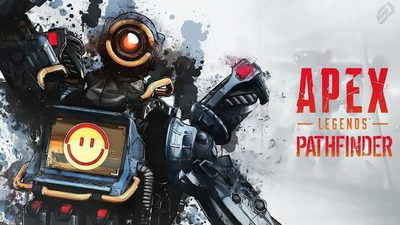
Cover gives you more options. A player behind cover can heal, reload, reposition, peek, avoid damage, change angles, or escape. A player in the open often has only one option: fight or die. Good positioning creates decision-making freedom. That is why professional players constantly move between cover rather than standing exposed. For movement and high-ground tools on specific Legends, see our Pathfinder Playstyle Guide.
Solo Queue Decision-Making
Solo queue requires a different mindset. You should play with your teammates, but you cannot assume they will always make the same decisions you would. Your teammates may push unexpectedly, rotate late, take unfavorable fights, split from the squad, ignore pings, or overextend. You still need to make your own decisions.
The principle is: Play as a team without making your survival completely dependent on your teammates. Full solo-queue systems (landing, RP math, IGL habits, and recovery) are covered in our Solo Queue to Master Ranked Guide.
When Should You Follow a Teammate?
If your teammate pushes, quickly evaluate whether following them is reasonable. Can I support them? Is the fight winnable? Do I have an angle? Can I trade damage? Can I escape if they get knocked? If the answer is yes, supporting may be correct. If following them guarantees that both of you die, creating separation may be better. Avoid turning one teammate’s mistake into a full-squad elimination.
Communication Improves Decision-Making
Good communication does not require constant talking. Useful communication is short, specific, and timely. Instead of “They’re over there!” say “Two teams, one weak, building roof.” Instead of “Let’s go.” say “Rotate left; right side is exposed.” Clear information helps your teammates make better decisions.
Master Your Legend’s Role
Your Legend affects the decisions available to your team. Understand your Legend’s strengths and weaknesses, when to use tactical abilities, when to save ultimates, how your abilities affect rotations and fights, and how they help your teammates. Do not use abilities simply because they are available. Use them to solve a specific problem: escape, create space, gather information, hold an area, or initiate with an advantage. For a current Legend example, see our Axle Guide for Season 30 Ranked.
Resource Management Is Decision-Making
Every ranked game has limited resources: ammunition, shields, health, batteries, med kits, grenades, ultimate charges, tactical cooldowns, and armor quality. Constantly evaluate whether your resources support your next decision. A squad with strong positioning but no ammunition may not be ready for a fight. A squad with full health but no escape abilities may not be ready to push a difficult building. Resources change what is strategically possible.
Weapon Selection and Range
Your weapons should influence your decisions. If your loadout is strongest at close range, avoid unnecessary long-range fights. If you have strong ranged weapons, pressure enemies before committing to a close-range engagement. Think about effective range, ammo availability, magazine capacity, reload timing, enemy armor, and terrain. Do not force every fight into the range where your weapons are weakest.
The Kill Feed Is Valuable Information
Pay attention to recent eliminations, teams fighting nearby, squad wipes, weapon information, and timing between engagements. If several squads are eliminated quickly, the number of remaining teams may be lower. If the kill feed suddenly becomes active nearby, expect the area to become more dangerous.
Endgame Decision-Making
Late-game Apex is where decision-making becomes especially important. The map is smaller. There are more teams per available area. Mistakes become more expensive. Prioritize strong cover, ring position, high ground when useful, enemy information, team spacing, resource preservation, and controlled engagements. Do not fight simply because you can. Every late-game fight has a greater chance of attracting another team.
Play for Position Before Placement
Strong endgame players often secure position before they need it. Waiting until the ring closes to find a position can leave you with poor options. Think ahead: Where will the next playable area be? Which team is likely to control it? How can we reach it without exposing ourselves? This forward planning creates better endgame decisions.
Do Not Panic When the Ring Closes
When the ring moves, do not immediately sprint toward the center. Look for cover, alternate routes, enemy positions, buildings, natural terrain, and safe crossings. Sometimes the safest rotation is not the shortest route. The objective is to reach playable space alive and in a position where you can continue making decisions.
Decision-Making Under Pressure
Apex is fast. You do not have unlimited time to analyze every situation. That is why strong decision-making eventually becomes instinctive. You develop this through repetition. Instead of memorizing thousands of individual situations, learn principles:
- Weak position → reposition
- Isolated enemy → pressure
- Multiple teams nearby → reduce exposure
- Low resources → reset
- Strong position → protect it
- No exit route → reconsider the fight
Avoid Emotional Decision-Making
Tilt can destroy ranked progress. Common emotional decisions include chasing a player because they escaped, taking a fight to recover lost RP, pushing because you are angry, rechallenging immediately after losing damage, following a teammate out of frustration, or taking unnecessary risks after a bad game. Apex does not care about your previous match. Each game is a new situation. Make the current decision based on current information.
Do Not Chase Every Enemy
An enemy escaping is not necessarily a problem. Sometimes chasing them leads your squad into a defensive position, a second squad, a trap, a bad ring position, or an isolated fight. If the enemy is no longer a meaningful threat, allow them to leave. Your objective is not to eliminate every player you see. Your objective is to maximize the quality of your game.
Learn From Every Death
One of the fastest ways to improve decision-making is to review your deaths. Do not ask only “Why did I lose the gunfight?” Ask “What decision caused the situation?” Maybe the real mistake happened 30 seconds earlier. You may have rotated through an exposed area, taken a fight without an exit, ignored another squad, pushed without your teammate, failed to reset, stayed in a bad position, chased damage, or rotated too late. The final gunfight may simply have been the final consequence.
A Simple Death Review System
- The decision — What did you choose to do?
- The information — What did you know at the time?
- The mistake — What did you misunderstand or ignore?
- The alternative — What other option was available?
- The lesson — What rule can you apply next time?
Example: Decision — took a fight outside the next ring. Information — we knew the ring was closing. Mistake — underestimated the time required to rotate. Alternative — rotate first and fight from playable terrain. Lesson — do not start unnecessary fights when the rotation is more important.
The Difference Between a Bad Outcome and a Bad Decision
A good decision can produce a bad result. You can take a favorable fight, have good positioning, hit your shots, communicate correctly, and still lose. A bad decision can also produce a good result if you get lucky. Do not judge your decision only by its outcome. Judge whether the decision was reasonable based on the information available at the time. This mindset helps players improve without becoming overly emotional about individual games.
Decision-Making for Master and Predator-Level Ranked Play
As you approach the highest ranks, small mistakes become increasingly expensive. You need to think about the entire game rather than individual fights. That means connecting Landing → Looting → Rotation → Position → Fight → Reset → Rotation → Endgame. Every decision influences the next one.
A poor landing may delay your loot. Delayed loot may delay your rotation. A late rotation may force you into a bad position. A bad position may force an unfavorable fight. The final elimination may look like a fighting mistake, but the actual problem began much earlier. High-level decision-making is about understanding these chains. For the full Predator-level framework, see our How to Reach Apex Predator Ranked Guide.
Build a Consistent Ranked Game Plan
A reliable game plan can reduce unnecessary decisions. Your basic framework can be:
This does not mean every game follows the same script. The lobby will force you to adapt. The framework simply gives you a foundation.
How to Practice Decision-Making
Mechanical practice is easy to understand. Decision-making practice requires intentional gameplay. During your next ranked session, focus on one question: “Why am I making this decision?” Before a fight, ask “What advantage do we have?” Before rotating, ask “Why this route?” Before pushing, ask “What happens if they survive?” Before chasing, ask “What do I gain by continuing?” Before disengaging, ask “What information tells me this fight is no longer favorable?” These questions build awareness. Eventually you will answer them automatically.
Combine Aim Training With Decision Training
Aim training can improve your mechanics, but mechanics alone will not solve poor decision-making. A player with excellent aim can still fight from the open, push without teammates, take bad rotations, ignore third parties, overextend, or lose high ground. Use the firing range to improve recoil control, tracking, flicking, movement, weapon swaps, and close-range mechanics. Then use real matches to practice fight selection, positioning, timing, rotations, communication, and risk management. Both areas matter.
Ten Ranked Decision-Making Rules
- Information comes before action. Do not rush into situations you do not understand.
- Position before aggression. Create a favorable position before committing to a fight.
- Do not fight just because an enemy is nearby. A fight needs a reason.
- Damage creates opportunities, not automatic pushes. Evaluate the situation before committing.
- Protect your escape route. Never enter a fight with no way out unless the situation demands it.
- Reset when your advantage disappears. Do not continue a bad fight because you already invested time.
- Do not start fights between two active teams. Control your approach and avoid becoming everyone’s target.
- Think one decision ahead. Ask what your current action creates next.
- Learn from the decision, not just the death. Find the moment where the game started going wrong.
- Stay adaptable. A plan is useful until new information makes it wrong.
Apex Legends Ranked Decision-Making Checklist
Before taking a major fight, quickly evaluate:
- Position — Do we have good cover?
- Numbers — Is our squad together?
- Health — Are we healthy enough?
- Resources — Do we have enough ammo and heals?
- Enemy — Are they split or vulnerable?
- Ring — Will this fight hurt our next rotation?
- Third parties — Who could arrive?
- Exit — Can we disengage?
- Reward — What do we gain?
- Risk — What happens if we lose?
If the answers are favorable, take the fight with a clear plan. If they are not, reposition, rotate, or wait.
- Apex Legends Solo Queue to Master: The Complete Ranked Climbing Guide
- Apex Legends Fighting Fundamentals: How to Win More Gunfights
- How to Reach Apex Predator in Apex Legends | Ranked Guide
- Apex Legends Axle Guide: Master Axle in Season 30 Ranked
- Pathfinder Playstyle Guide: Master Movement and Grapples
- All Apex Legends guides
Frequently Asked Questions About Ranked Decision-Making
Is aim enough to climb ranked in Apex?
No. Aim is essential, but decision-making — when to fight, when to rotate, when to disengage, and how to manage risk — often decides whether you gain or lose RP. Players with strong mechanics still die early by taking unnecessary fights or poor rotations.
How do I know when a fight is worth taking?
Evaluate position, resources, numbers, enemy condition, ring, third-party risk, and exit options. The more advantages you have, the more reasonable the fight. If several factors are negative, reposition or wait.
Should I always push after cracking an enemy?
No. A crack is an opportunity, not an automatic green light. Check where their teammates are, whether you have cover and support, and whether another team can third party. Push when the risk is low and the reward is high.
What is the difference between playing safe and playing passive?
Playing safe means taking high-quality fights where you have an advantage and an exit. Playing passive means avoiding almost every fight. The first builds RP and skill; the second eventually stalls your climb.
How should I review my deaths to improve decision-making?
After a bad game identify: the decision you made, the information you had, the mistake, the alternative that was available, and the lesson for next time. The final gunfight is often just the consequence of an earlier choice.
When should I disengage from a fight?
Disengage when your team is heavily damaged, you have lost position, another team is approaching, you are out of resources, the enemy has a major advantage, or your escape route is closing. A fight is not a contract — if the situation changes, change your decision.
How do I decide between an early and late rotation?
Early rotations give more time to secure buildings and high ground but risk being surrounded. Late rotations give more information but fewer safe positions. Choose based on map, ring, lobby density, and whether you already control a strong route.
What should I check before third-partying another fight?
How long the fight has lasted, likely damage taken, safe approach routes, ring movement, other squads that could arrive, and whether you can exit if both original teams turn on you. Timing and information beat rushing every gunshot.
How does solo-queue decision-making differ from premade play?
In solo queue you cannot assume perfect coordination. Support teammates when the fight is still winnable, but avoid chaining one teammate’s mistake into a full squad wipe. Play as a team while protecting your own survival options.
What is the most important ranked decision framework?
Before any major fight ask: Position + Resources + Numbers + Enemy Condition + Ring + Third-Party Risk + Exit Options. The more of these factors favor you, the better the fight.
Final Thoughts
Apex Legends ranked decision-making is the skill that connects every other part of your gameplay. Aim helps you win gunfights. Movement helps you survive. Legend abilities create opportunities. Positioning gives you advantages. But decision-making determines when and how you use all of those skills.
The strongest ranked players are constantly evaluating the game around them. They know when to fight and when to leave. They know when damage is enough and when a push is justified. They understand that a good rotation can prevent a bad fight. They recognize when a teammate needs support and when following them would turn one mistake into three deaths.
If you want to climb toward Master or Predator, focus on becoming a player who creates advantages before committing. Improve your positioning, understand rotations, track enemy teams, manage your resources, communicate clearly, and review the decisions that lead to your deaths. You will still lose fights. You will still make mistakes. Even highly skilled players do. The difference is that every game can teach you something.
Play with purpose. Make decisions based on information. Create advantages before taking risks. And turn every ranked game into an opportunity to become a smarter Apex Legends player.
Whether you want structured ranked progress, Predator RP, or sessions with high-level players, BoostingXP focuses on clear outcomes and account safety.
Explore Apex Legends Services Rank Boost Play With a ProThis article is an independent informational publication. Apex Legends and related trademarks belong to Respawn Entertainment / Electronic Arts and their respective owners. Service availability, policies and pricing may change. Always review the current service page before ordering.