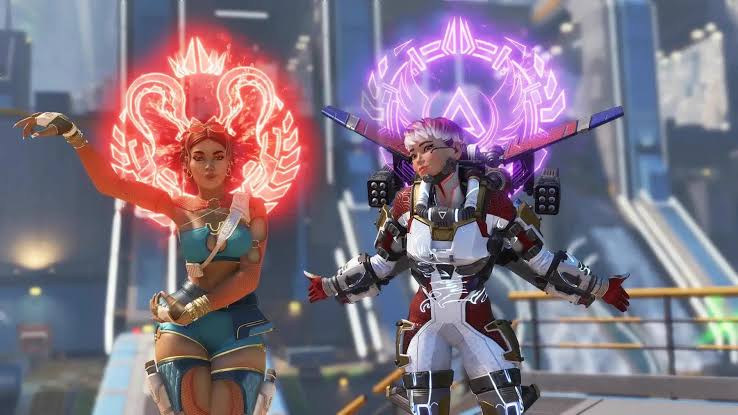
You're sitting 40 RP short of Master. Your jumpmaster sends the squad into the hottest drop on the map, one teammate dies holding a Mozambique, the other chases a cracked Wraith into two of her friends, and you spectate the rest of the game feeling like the matchmaking gods personally hate you. Every ranked player has lived that game. The uncomfortable truth is that the players who make it out of solo queue have the same random teammates you do. What they don't have is a list of habits that quietly bleed RP every single session.
Quick answer
Most players who stall below Master in solo queue aren't losing to bad aim. They're losing to repeatable decisions: hot-dropping without a plan, chasing cracked enemies into open ground, rotating late through chokes, following doomed pushes, refusing to reset and queueing while tilted. Fix those habits and random teammates stop deciding your rank.
Solo queue mistakes at a glance
You don't need to play every game perfectly to hit Master. You need to stop paying for the same expensive mistakes over and over. Here's the short version of everything below.
- What makes solo queue different?
- Early game mistakes (1–4)
- Rotation mistakes (5–6)
- Fight selection mistakes (7–8)
- Positioning mistakes (9–11)
- Teammate mistakes (12–15)
- Reset and third-party mistakes (16–19)
- Awareness and mechanics mistakes (20–24)
- Legend and ability mistakes (25–27)
- Endgame mistakes (28–31)
- Tilt mistakes (32–34)
- Self-review mistakes (35–36)
- Adaptation mistakes (37–40)
- The solo queue Master climb framework
- A practical solo queue routine
- Ten solo queue rules for Master
- Frequently asked questions
What makes solo queue different from playing with a premade?
In solo queue you're playing with incomplete control over your own squad. Your teammates might be better or worse mechanically, know the map better or worse, love W-keying or refuse to leave a building, talk constantly or never ping once. You can't make them play your way.
So stop asking, "Why won't my teammates play the way I want?" That question has no answer. The players who climb ask a different one: "Given the team I actually have, what's the best decision available right now?" It sounds small. It changes everything about how you play a match.
For the full climb system these fixes plug into, read our Solo Queue to Master Ranked Guide.
Early game: how are you losing the match before the first fight?
Mistake 1: Treating every solo queue game like a 1v3
Get burned by randoms enough times and you start playing like they don't exist. You loot alone, rotate alone, take fights alone. It feels like self-reliance. It's actually throwing away two free guns.
Even a mediocre teammate gives you damage, pressure, information, a crossfire angle, a revive and a distraction the enemy has to respect. When your Bloodhound cracks someone, that's your window. When your Gibby holds a strong spot, you build around it.
Mistake 2: Landing without a plan
Your ranked game starts in the dropship, not on the ground. Most players just follow the jumpmaster and figure it out mid-air. By the time they land, three squads are already on the same POI and the plan is "find a gun, please."
While you're still flying, look at how many teams are heading your way, where you can land with some space, what loot you can realistically grab, and where the first ring is likely to pull you. Your first job isn't the best loot in the building. It's a playable opening.
Mistake 3: Taking every contest
Hot drops are fun, and if your mechanics are strong they can snowball a game. But a contested landing is a coin flip with a bad exchange rate. Win it and you're rolling. Lose it to a floor Mozambique and you're back in the lobby with nothing but an entry cost.
Be honest with yourself: is this contest a decision, or are you fighting because another team happened to land next door? If you're not confident, peel off, loot somewhere quieter and play the game you queued for. You're trying to climb, not prove you can win every opening 50/50.
Mistake 4: Over-looting
Then there's the opposite player. You know the one. Four minutes into the match, still opening bins for a 2x HCOG while the rest of the lobby rotates into the good buildings.
Loot has diminishing returns. Once your squad has two usable weapons, ammo, basic heals, decent shields and the attachments that matter, the next barrel stabilizer is worth far less than getting to a good position first. Loot until you're functional, then play the map.
Rotation mistakes that drag you into bad fights
Mistake 5: Rotating without information
Moving because the ring moved isn't a rotation. It's a hope. Before your squad leaves a building, you should have rough answers to a few questions. Where's the next safe area? Which teams are nearby? Which route has cover? Where could someone hold you? Is another squad about to take the same path?
A good rotation solves a problem. If you can't say what problem yours solves, you're just walking.
Mistake 6: Rotating too late
We've all been the squad sprinting through the storm with 20 seconds left, getting beamed from a ridge by a team that got there two minutes earlier. Late rotations force you through chokes, open fields and buildings someone else already owns, often with multiple teams watching.
It's even worse when your comp has no mobility. Leaving early feels boring in the moment, but claiming a strong position before the lobby crowds in wins more RP than any clutch you'll hit in the storm.
Fight selection: why are you taking fights you don't need?
Mistake 7: Fighting because you're bored
Mid-game gets quiet. Nothing's happening, your hands are itchy, and then you spot a squad crossing a field 150 meters away. Before you know it you're shooting at them, for no reason other than wanting something to do.
Ranked isn't deathmatch. Before you shoot, ask what the fight actually gets you: kills, a better position, loot, control of a rotation, removing a threat or an endgame edge. If the honest answer is "nothing much," keep moving.
Mistake 8: Chasing cracked enemies
This one has ended more ranked games than bad aim ever will. You hit a clean 150 on someone. They back off. You sprint after them because they're one shot. Around the corner are their two full-HP teammates, and now you're in the open against three.
The damage was good. The decision after it was bad. Before you push a cracked player, check where their teammates are, whether you have an angle, whether you're healthy, whether you can close the gap safely and whether anyone else is nearby. Damage gives you an opportunity. What you do next decides whether it's a knock for you or on you. We go deeper on gunfight execution in our Fighting Fundamentals guide.
Positioning mistakes that lose gunfights before they start
Mistake 9: Not creating temporary 1v1s
The best players rarely take fair fights. Apex is a team game, but watch any high-level player and you'll notice they almost never let three enemies shoot at them at once. They use doors, rocks, walls, head glitches, height and abilities to make sure only one or two guns can hit them at any moment.
You don't need to literally isolate one enemy. The goal is simpler: reduce the number of guns that can shoot you at the same time. Get that right and your aim suddenly looks a lot better.
Mistake 10: Standing in the open
Behind cover, you can heal, reload, peek, change angles, wait for your team or leave. In the middle of a field you can do roughly one thing, and it usually involves the death box animation.
Always know where your nearest cover is before you shoot. Good positioning gives you options. Bad positioning takes them away one by one.
Mistake 11: Re-peeking the same angle
You crack someone from a nice head glitch. They drop behind cover. You peek the exact same spot again, and this time they're pre-aimed and waiting.
After you deal damage, move. Go left, go right, go higher, swing around the rock, take the next window. A new angle forces the enemy to react. The same angle twice just gives them a free shot at a head they already know about.
Teammate mistakes: when to follow, when to help and when to leave
Mistake 12: Separating from your team
If you're 150 meters away looting a supply bin when your squad gets jumped, you're not a teammate. You're a spectator with extra steps.
Stay close enough to trade damage, create crossfires, revive and rotate together, but not so tight that one Fuse ult or a single frag hits all three of you. Good spacing gives you freedom without cutting your support line.
Mistake 13: Following every teammate push
Your teammate jumps off high ground into a full squad. You follow. They run out of the ring chasing a knock. You follow. Two boxes instead of one.
Teamwork doesn't mean copying every decision. Before you commit, ask one question: can I actually support this play? If yes, go and make it work. If no, reposition and keep yourself alive so the game isn't over when their play falls apart.
Mistake 14: Abandoning teammates too quickly
The flip side is the player who hears "teammate knocked" and instantly sprints the other way. Sometimes that's right. Often it isn't.
Take one second to read it. Can you win the fight? Force the enemy off the knock? Grab the banner? Escape and respawn them later? Don't sacrifice yourself on autopilot, and don't abandon your team on autopilot either.
Mistake 15: Trying to save every teammate
Saving a teammate is valuable. Running straight into three enemies standing over their box usually isn't a save. It's a second death.
When the numbers are against you, the better sequence is survive, reset, reposition, recover, re-engage. Staying alive gives your squad another chance. Going down with them gives the enemy another kill.
When should you reset, and what about third parties?
Mistake 16: Refusing to reset
Knowing when to reset is one of the clearest differences between average and advanced ranked players. A reset can mean healing, reloading, pulling back for shields, waiting on cooldowns, moving to another building or just creating distance.
Staying in a fight because you already put damage on someone is emotional, not tactical. If your advantage is gone, it's gone. Back off, reset and take the fight again from a better spot.
Mistake 17: Fighting with no exit
Before you commit, know where you're going if it goes wrong. A door, a zipline, a jump tower, a building, a ridge, a Legend ability or your next rotation route all count.
You don't need a perfect escape plan every time. You do need to know what happens if the fight turns, because in ranked it often does.
Mistake 18: Ignoring third parties
Every gunshot is an invitation. The longer your fight runs, the more squads RSVP. Before you start shooting, think about who can hear you, where they'd come from and whether you can finish or disengage quickly.
This is why clean, fast fights matter so much in ranked. A long fight you win can still leave you with no shields and a fresh squad dropping in on your heads.
Mistake 19: Taking the middle of two teams
You hear a fight, sprint in to third party and end up directly between both squads. Suddenly you're not the third party. You're the easiest target either team has seen all game.
Pick a controlled angle instead. Hold cover, let the two teams trade damage and wait until one of them is weak. Then take the fight on your terms.
Awareness and mechanics mistakes
Mistake 20: Ignoring the kill feed
The kill feed is free intel and most players never read it. It tells you which squads just got wiped, where fights are happening and how busy your area is.
If several teams have been eliminated, your placement is getting more valuable and it may be time to play tighter. If kills keep popping up nearby, that zone is getting dangerous. Let the feed shape your next decision.
Mistake 21: Not listening to audio
Footsteps, cells cracking, reloads, doors, ziplines, abilities and distant gunfire all tell you something before you see a single enemy. In solo queue you can't count on callouts, so your ears have to do the work.
Play with a headset and train yourself to separate enemy sounds from your teammates'. That half-second of warning wins more fights than most people realize.
Mistake 22: Ignoring enemy mistakes
Good players don't wait for enemies to make perfect plays. They punish imperfect ones. Someone overextends, heals in the open, reloads behind thin cover, whiffs a spray, crosses a field or wastes their ability.
Those moments are your openings. Spot them fast and make them pay.
Mistake 23: Trying to win every fight with aim
Aim matters. But no amount of recoil control fixes being outnumbered, caught in the open, surrounded or shot from three angles at once.
If you keep losing fights you feel you should win, rewind to the moment before the first shot. The problem usually isn't your spray. It's where you were standing when it started.
Mistake 24: Not practicing recoil
That said, you can't think your way out of every gunfight either. You still need real confidence with your weapons: recoil, tracking, flicks, strafing, weapon swaps, hip-fire and close-range fights.
Use the Firing Range to build mechanics. Use ranked matches to build decision-making. Mixing the two up is how people spend a whole session "warming up" in lobbies that cost RP.
Legend and ability mistakes
Mistake 25: Changing Legends constantly
Switching Legends every few games feels flexible. In practice it means you never learn the details that win fights: exactly when your tactical comes back, what your ult can escape from, which angles your kit is built for.
Pick a small pool that fits how you play and learn it properly before you need it in a tense endgame.
Mistake 26: Not mastering your role
Every Legend gives you a job: initiating, mobility, info, zone control, support or defense. A common solo queue problem is trying to do all of them at once, like playing a support Legend as the entry fragger and wondering why fights fall apart.
Know your role in the comp you actually got, and do that job well.
Mistake 27: Using abilities without a purpose
Your tactical being ready isn't a reason to press it. Ask what problem you're solving: making space, blocking an angle, escaping, starting a fight, scanning, protecting a teammate, taking high ground or locking a building.
Most wasted abilities come from panic. The one you burn for nothing is the one you won't have when it matters.
Endgame mistakes that cost you top-five placements
Mistake 28: Rotating through the most obvious route
If there's one clear path to the next ring, every team sees it too, and someone will be sitting on it. Look for routes with better cover, fewer sightlines and more ways out, even if they're a bit longer.
A slightly slower safe route beats a fast one through an enemy-held choke every time.
Mistake 29: Ignoring endgame positioning
High-level players are thinking about ring four while everyone else is still reacting to ring two. Where will teams want to go? Which building or ridge will be valuable? Where can you hold cover? Who's likely to contest it?
Good endgames are set up early. By the time the final circles close, the best spots are already taken.
Mistake 30: Playing for placement with zero fight ability
Playing safe doesn't mean hiding all game. Squads that avoid every fight often reach the top five with bad loot, no confidence and no idea how to win the final fight.
What you want is controlled aggression: take fights that improve your position, your resources or your chances of winning, and skip the rest.
Mistake 31: Chasing kills instead of winning games
An eight-kill game that ends in 12th feels great and does less for your climb than you think. Consistent placements with smart fights are what move you up.
After each match, don't just check your kills. Ask whether you survived long enough, took the right fights, improved your position, helped your team, rotated well and avoided needless risks.
Tilt mistakes: how emotions cost you RP
Mistake 32: Taking revenge fights
They just killed your teammate and you want them dead. Completely human. Also a great way to hand them a second kill, because they're already ahead and ready for you.
Base your next move on the situation in front of you, not the fight you just lost.
Mistake 33: Tilting after losing RP
One bad game and a lot of players start playing faster, angrier and looser. That loses the next game, which makes them even angrier, and suddenly a good day has turned into a demotion.
Treat each game on its own. Last match's result doesn't get a vote on this one.
Mistake 34: Playing too long while tilted
You know the signs even if you don't like admitting them: taking fights you'd normally skip, blaming everyone, rushing, ignoring the ring, rechallenging immediately after losing a fight.
When you see them, get up. Grab water, walk around, come back in ten minutes. That break protects more RP than any tip in this guide.
Self-review mistakes that keep you stuck
Mistake 35: Not reviewing your deaths
"My teammate sold" is the most common post-game review in Apex, and it never helps. Your death screen is information.
Even if a teammate made the first mistake, look at your response. Could you have played safer, found a better angle, disengaged, supported them properly, rotated earlier or skipped the fight altogether? That's where your improvement lives.
Mistake 36: Blaming teammates for every loss
Your teammates will make mistakes. That's part of the deal in solo queue, and being angry about it doesn't change your next game.
Split every loss into two piles. Outside your control: their aim, their rotation, their decision to jump. Inside your control: your positioning, your choice to follow, your timing. Spend all your energy on the second pile.
Adaptation mistakes: playing the team you have
Mistake 37: Not adapting to your teammates
Aggressive teammates? Support the aggression without blindly following it. Passive teammates? Create chances while keeping the squad together. Teammates who split constantly? Position somewhere you can still reach both.
Every lobby hands you a different squad. Adapting to it is the core skill of solo queue.
Mistake 38: Expecting teammates to read your mind
You don't need a mic to communicate. Pings cover almost everything: enemy locations, rotation direction, attack, fall back, loot and danger.
A single well-timed ping can stop a teammate from walking into a squad you already saw. It's the cheapest carry in the game.
Mistake 39: Refusing to change your plan
You planned to rotate through the east side. Then you spot three teams sitting on it. The plan was good five seconds ago. It isn't now.
Change direction. Strong players hold plans loosely and update them the moment new information shows up.
Mistake 40: Thinking one game defines your skill
Bad landing, bad loot, a stacked enemy squad, a random third party, a disconnect. Any single game can go sideways for reasons you didn't control.
Judge yourself over many games, not one. If the same mistake shows up five times in a session, that's your next thing to fix.
The solo queue Master climb framework
If your goal is Master, organize your practice around five areas that feed each other. Strong positioning makes average aim look good, and good awareness turns a reset into a third-party opportunity.
| Area | What to work on | Mistakes it fixes |
|---|---|---|
| Mechanics | Aim, recoil, movement, weapon swaps, close-range fights | 23, 24 |
| Positioning | Cover, angles, high ground, buildings, head glitches, team spacing | 9–12, 29 |
| Decision-making | Fight selection, rotations, resets, risk, timing | 2–8, 16–19, 28, 30, 31 |
| Awareness | Enemy positions, audio, kill feed, ring, third parties, resources | 20–22 |
| Adaptation | Teammates, enemy skill, lobby pace, ring, Legend comp, mindset | 1, 13–15, 25–27, 32–40 |
A practical solo queue routine for every ranked game
Run the same checklist every match until it's automatic.
- Before the drop: choose your landing plan.
- After landing: get functional loot fast.
- Early game: find out which teams are near you.
- Mid game: read the ring and rotate with a purpose.
- Before a fight: check position, numbers, resources and third-party risk.
- During a fight: create angles and temporary 1v1s.
- After dealing damage: evaluate before you push.
- After a knock: convert the advantage without overextending.
- After losing the advantage: reset.
- Late game: prioritize position and controlled fights.
- After you die: find the decision that put you there.
Ten solo queue rules for players chasing Master
- Play with your team, but don't depend on your team.
- Don't fight without a reason.
- Don't chase damage into bad positions.
- Always know where your cover is.
- Create temporary 1v1s.
- Reset when your advantage disappears.
- Watch for third parties.
- Rotate before the lobby forces you into a bad route.
- Use your Legend's abilities with purpose.
- Review your own decisions after every death.
BoostingXP offers Apex Legends Rank Boost, Predator Boost and Pro Play sessions with experienced high-level players. Pro Play is the pick if you want to watch these decisions happen live in your own lobbies.
Play With a Pro Rank Boost Predator Boost- Apex Legends Solo Queue to Master: The Complete Ranked Climbing Guide
- Apex Legends Fighting Fundamentals: How to Win More Gunfights
- Apex Legends Ranked Decision-Making Guide
- How to Reach Apex Predator in Apex Legends | Ranked Guide
- All Apex Legends guides
Frequently asked questions about solo queue mistakes
Can you reach Master in Apex Legends by solo queueing?
Yes. Solo queue to Master is harder than playing with a premade, but it is very achievable if you control your landings, rotations, fight selection, positioning and resets. Players who climb solo focus on the decisions they own, review their own deaths and judge their progress over many games instead of one.
What is the biggest solo queue mistake that costs RP?
Chasing cracked enemies into bad positions is the most expensive one, closely followed by rotating late into contested chokes. Both turn a good moment, like 150 damage or a safe early game, into an early death. Check isolation, cover and third-party risk before every push.
Should you always follow your teammates in solo queue?
No. Support plays you can actually help win, but evaluate every push first. Following a teammate off high ground or into a full squad usually turns one death into two. Stay close enough to trade and revive, and keep enough independence to reset when their play falls apart.
When should you reset instead of continuing a fight in Apex?
Reset when your advantage is gone: shields are broken, teammates are weak, ammo or heals are low, key abilities are on cooldown, your position is compromised or a third party is coming. Pulling back to heal and take a better angle wins more fights than staying in because you already dealt damage.
How do you stop tilting in Apex Legends ranked?
Treat every game separately and take a short break the moment you notice the warning signs: taking fights you would normally avoid, blaming teammates, rushing, ignoring the ring or rechallenging right after losing a fight. Ten minutes away from the game protects more RP than queueing angry.
Is aim enough to climb solo queue in Apex Legends?
No. Aim is essential, but decisions about when to fight, when to rotate and when to disengage usually decide whether you gain or lose RP. Plenty of players with great mechanics stay stuck because they take unnecessary fights or rotate late into bad positions.
Final thoughts: control your decisions, not the lobby
Solo queue is frustrating, but it's also brutally honest. It strips away the premade who covers your mistakes and shows you exactly where your game leaks. You can't control your teammates, the enemy squads, where the ring closes or who third parties you.
You can control almost everything else. Better landings. Earlier rotations. Not chasing that one-shot Wraith. Playing cover. Changing angles. Resetting when the fight turns. Supporting teammates without following them off a cliff. Learning your Legend. Pinging. Reviewing your deaths. And, most of all, not making the same mistake for the fifth time this week.
The strongest solo queue players know Apex is still a team game. They use their teammates when they can and stay sharp enough to survive when the squad breaks down. They fight when they have the edge, leave when it's gone, rotate before they're forced to, punish enemy mistakes and treat every death as information.
Build your game around that, and the climb to Master, and eventually Predator, gets a lot less random. Don't try to control the lobby. Control your decisions.
Whether you want structured ranked progress, Predator RP or live sessions with high-level players, BoostingXP focuses on clear results and account safety.
Explore Apex Legends Services Play With a ProThis article is an independent informational publication. Apex Legends and related trademarks belong to Respawn Entertainment / Electronic Arts and their respective owners. Before using any boosting service, review EA's current Apex Legends rules on its official support site. Service availability, policies and pricing may change, so always check the current service page before ordering.