Best Marvel Rivals Team Comps for Solo Queue Ranked
In Marvel Rivals solo queue, the best team comp is usually the one your random teammates can actually play, not the one pros run. The advice that lasts from season to season is a flexible 2-2-2: two Vanguards, two Duelists and two Strategists, adjusted to what your team picks. This guide gives six comp templates, a five-step way to build one during hero select, and which comps hold up at each rank. The hero picks are being updated for the current season.
For how tiers, rank points and the Chrono Shield work, see the Marvel Rivals ranked system explained.
What changed in Season 10: Season 10 (Butcher’s Blasphemy) went live on September 11, 2026. Gorr the God Butcher joined as a new Duelist, Scarlet Witch was reworked, and every Strategist now builds ultimate charge more slowly: healing converts at 65% instead of 70%, and damage at 50% instead of 55%. From Gold III up, Competitive uses an alternating ban phase in which each team bans three heroes. The composition templates in this guide still apply; the hero picks, tier list and Team-Up specifics are the Season 9.5 baseline. Season 10.5 starts on October 9, so check its patch notes before relying on hero-specific details. Our Marvel Rivals Season 10 overview has the full patch summary.
Why Marvel Rivals Solo Queue Team Comps Are Different From Coordinated Six-Stacks
The best Marvel Rivals team comps for solo queue are not necessarily the same compositions used by coordinated six-stacks. When you queue alone, you cannot control which heroes your teammates pick, whether they use voice chat, or whether they understand the same engage timing you do. That single reality changes what makes a team composition effective in Marvel Rivals ranked.
For solo players, the strongest Marvel Rivals comps are generally built around survivability, independent value, flexible heroes, reliable frontline pressure, and simple win conditions. Instead of requiring six players to execute a perfect combination, these compositions continue working even when teammates have different ideas about how the match should be played.
The most important rule is simple: Do not try to force the perfect composition. Build the best composition possible around the heroes your teammates have already selected. For players climbing through ranked, a flexible 2-2-2 structure remains an excellent starting point: two Vanguards, two Duelists, and two Strategists. From there, you can adapt toward sustain, brawl, poke, or dive depending on the map, enemy lineup, and your team’s strengths.
Season 9.5 continued refining the Team-Up system while adding The Hood as the new Vanguard hero. The official August 27 patch fixed several Team-Up interactions, and the August 7 balance post plus Season 9.5 patch notes shaped the Season 9.5 meta. Always check the latest official patch notes before treating any single lineup as permanent.
At BoostingXP, we approach ranked climbing the same way: read the lobby, identify the win condition, and select heroes that can consistently create value without depending on perfect coordination.
What Makes a Good Marvel Rivals Solo Queue Team Comp?
A coordinated team can build around very specific strategies. For example, a six-stack might choose multiple mobile heroes specifically because they intend to execute synchronized dives. They can communicate targets, coordinate ultimate usage, and decide exactly when to engage.
Solo queue is different. You may have five teammates who do not use voice chat, pick different roles, engage at different times, ignore objectives, play independently, switch heroes throughout the match, or simply do not understand your intended strategy. Therefore, a good solo-queue composition needs a low coordination requirement.
The best solo-queue compositions usually have five characteristics:
- Strong independent heroes — Your hero should still generate value even when teammates are making mistakes.
- Reliable sustain — Healing, shields, defensive abilities, and resurrection mechanics become extremely valuable when you cannot depend on teammates to avoid damage.
- Frontline stability — Someone needs to contest space, protect Strategists, and create room for Duelists.
- Multiple sources of damage — A team should not completely collapse if one Duelist is having a bad game.
- A simple win condition — Everyone should be able to understand what the team is trying to accomplish even without communicating.
That is why solo queue tends to reward sustain and flexible brawl compositions more consistently than highly synchronized strategies. The goal is not to invent a perfect six-hero puzzle. The goal is to create a team that can still function when two or three players are making suboptimal decisions.
The Six Most Useful Marvel Rivals Solo Queue Composition Templates
There is no single six-hero lineup that dominates every lobby. Instead, think about team compositions as templates. The most useful templates for Season 9.5 are:
- Dual-Strategist Sustain
- Brawl Frontline
- Poke and Range
- Balanced 2-2-2
- Dive
- Counter-Flex
Each has a different purpose and a different coordination requirement. Understanding when to use each template is more valuable than memorizing any fixed hero list, because the players who climb are the ones who read the lobby faster than the enemy team can exploit its weaknesses.
1. Dual-Strategist Sustain Comp
Win condition: Survive longer than the enemy team.
For most solo-queue games, a sustain-oriented composition is one of the safest structures you can build around. The basic idea is simple: two Vanguards + two Duelists + two Strategists. The important part is not necessarily the exact six heroes. It is having enough frontline presence and healing to prevent individual mistakes from immediately becoming lost team fights.
Why It Works in Solo Queue
Solo players make mistakes. Someone walks too far forward. A Duelist misses an ability. A Vanguard takes unnecessary damage. A teammate gets caught by an ultimate. In a coordinated team, these mistakes can be punished immediately. In a sustain composition, however, your team has more opportunities to recover. That additional survivability creates more time for your Duelists to deal damage. It also makes objective fights much more forgiving.
Potential anchors include flexible Vanguard and Strategist options that fit the current balance environment. Rocket Raccoon remains particularly interesting for solo queue because his kit can provide utility beyond simply healing. His ability to contribute from the backline while supporting teammates makes him useful when your team lacks coordination. The important lesson is not “always play Rocket.” It is: when your team already has damage but lacks reliable sustain, filling the Strategist role can have more impact than adding another Duelist.
Why Two Strategists Are So Valuable
One of the most common mistakes in ranked Marvel Rivals is assuming that more damage automatically means more carry potential. It does not. Six players cannot deal damage if they are dead. A second Strategist provides redundancy. If one support is pressured, the second can continue supporting the team. If one Strategist dies, the team does not immediately lose all healing. If the enemy commits an ultimate to kill one support, the other can stabilize the fight. This creates a much more forgiving team structure.
Solo-queue rule: If your team already has several Duelists and only one Strategist, strongly consider filling Strategist instead of adding another damage hero. You are not giving up carry potential. You are giving your existing damage dealers more opportunities to deal damage.
2. Brawl Frontline Comp
Win condition: Control the objective through sustained frontline pressure.
The brawl composition is ideal when your teammates naturally group around the objective but do not have the coordination necessary for a sophisticated dive strategy. Instead of trying to attack the enemy backline simultaneously, you simply create a difficult frontline for the enemy to break. A typical structure still looks like 2 Vanguards + 2 Duelists + 2 Strategists, but the emphasis is heavily placed on frontline durability and area control.
Why Brawl Works in Solo Queue
Brawl requires less timing. Your team can walk toward the objective together. Your Vanguards occupy space. Your Strategists keep them alive. Your Duelists attack targets that become exposed. That is considerably easier to execute than “Wait three seconds, dive their Strategist, then collapse on the Duelist.” The enemy has to respond to your frontline before dealing with the rest of your team.
Devil Dinosaur and Frontline Value
Devil Dinosaur remains particularly relevant to frontline compositions. His kit naturally fits situations where the objective is contested and your team wants to occupy space. The August balance update increased some of his damage and improved the Surf & Turf Team-Up with Jeff the Land Shark, increasing its duration and ally healing. That makes Devil Dinosaur an especially interesting option when you want a durable frontline that can disrupt the enemy formation.
Example brawl structure (blueprint, not a mandatory lineup): Vanguard Devil Dinosaur or similar durable frontline, second Vanguard such as Peni Parker or Magneto, flexible Duelists, and two Strategists focused on sustain and utility. The actual heroes should depend on what your teammates and opponents select. Always verify current interactions against the latest official balance notes.
3. Poke and Range Comp
Win condition: Deal damage before the enemy can force a close-range fight.
Poke compositions are particularly effective against teams that want to stand directly on the objective. Instead of accepting the enemy’s preferred range, you force them to walk through damage before they can begin their engagement. The general structure is a defensive Vanguard, long-range Duelists, and damage/sustain Strategists. The exact lineup depends heavily on the map and enemy composition.
When Poke Is Strong
Poke becomes particularly valuable when the enemy has limited mobility, a predictable frontline, weak long-range pressure, poor cover usage, difficulty closing distance, or players who repeatedly walk through the same choke. Your objective is not necessarily to secure immediate eliminations. Instead, you want to create health advantages. If the enemy Vanguard enters the objective at 50–60% health while your team is near full health, your team already has a meaningful advantage.
Poke Requires Patience
One of the biggest mistakes with poke is treating it like a normal brawl. You do not need to force the engagement. If your team is winning the ranged exchange, continue creating pressure. A common solo-queue mistake is: enemy loses health, enemy retreats, your Duelist chases, the Duelist gets isolated, enemy turns the fight, your team loses the advantage. Instead: pressure → force cooldowns → reduce health → control space → engage when the advantage is real. That is how poke becomes a team composition rather than simply six players shooting from different locations.
4. Balanced 2-2-2 Comp
Win condition: Cover every major job without creating an obvious weakness.
When you have no clear reason to specialize, 2-2-2 is the safest default. That means two Vanguards, two Duelists, and two Strategists. The composition provides frontline presence, damage, healing, objective control, defensive utility, and multiple possible win conditions. It also gives you room to adapt during the match. Your Duelists can change depending on the enemy. Your Vanguard players can switch to improve protection or pressure. Your Strategists can change depending on whether the team needs more healing or utility.
Why 2-2-2 Is So Reliable
The biggest advantage is redundancy. If one player performs poorly, the entire team does not necessarily collapse. One Duelist having a bad game does not remove all damage. One Vanguard dying does not eliminate your entire frontline. One Strategist being eliminated does not necessarily end your sustain. That matters enormously in solo queue. A highly specialized composition can have a higher theoretical ceiling, but a balanced composition often has a higher floor. And ranked climbing is about consistently winning games—not producing one spectacular game followed by three disasters.
In the Season 9.5 environment, 2-2-2 remained the most transferable framework across maps and ranks, and that hasn't changed with Season 10. Treat it as a foundation, not a rigid rule. When the lobby clearly favors another approach, adapt. When it does not, 2-2-2 keeps your team functional.
5. Dive Comp (High Coordination Risk)
Win condition: Collapse on a vulnerable target before the enemy can respond.
Dive is one of the most powerful strategies in coordinated Marvel Rivals. It is also one of the easiest compositions to misunderstand in solo queue. The concept is straightforward: find an isolated target → engage together → eliminate them → reset or continue. The problem is the word “together.”
Why Dive Is Difficult in Solo Queue
Imagine your team has three mobile heroes. Your first player jumps in. The second player is still 30 meters away. The third player is farming an enemy Vanguard. The first player dies. Now the enemy has a numbers advantage. The problem was not necessarily the hero selection. It was the timing. A coordinated dive requires target selection, engage timing, positioning, cooldown awareness, follow-up, and escape timing. Voice communication makes those things significantly easier. Without it, the same composition can become six individual players entering fights at different times.
Solo-queue rule: Do not force a dive composition simply because dive is theoretically powerful. If your team is naturally playing mobile heroes and repeatedly moving together, then dive can work. If everyone is playing independently, choose a composition that does not depend on perfect synchronization. In Season 9.5, the presence of The Hood and ongoing Team-Up tuning can change how certain dive or anti-dive interactions feel, so always check the latest official patch resources before assuming old dive pairings still function the same way.
6. Counter-Flex Composition
Win condition: Build specifically to punish what the enemy team is doing.
This is one of the most useful concepts for experienced solo-queue players. Instead of entering the match with “I am going to play my favorite composition,” ask “What is the enemy team trying to accomplish?” Then pick the hero that interferes with that plan.
For example: Enemy brawl? Use range and poke. Enemy poke? Use mobility and dive pressure. Enemy dive? Use sustain, defensive utility, and peel. Enemy has overwhelming frontline? Increase sustained damage and exploit range. Enemy has weak frontline protection? Attack their backline. This creates a simple counter cycle: Brawl → Poke → Dive → Anti-Dive/Sustain → Brawl. It is not a rigid rock-paper-scissors system, but it provides a useful mental model for reading the lobby in real time.
Marvel Rivals Team Comps by Enemy Strategy
| Enemy Strategy | Your Best Response | Primary Goal |
|---|---|---|
| Heavy Brawl | Poke / Range | Damage before engagement |
| Heavy Poke | Dive / Mobility | Close distance quickly |
| Dive | Sustain / Peel | Survive the initial engage |
| Weak Frontline | Pressure Backline | Create early eliminations |
| Heavy Objective Control | Range + Disruption | Force them off the point |
| Strong Single Target Pressure | Dual Strategists | Increase survivability |
| Scattered Team | Brawl | Punish isolated players |
Composition should respond to the game, not the other way around. Always verify current balance against official patch notes.
Marvel Rivals Solo Queue Team Composition Tier List (Season 9.5)
For general ranked climbing, the major composition styles rank roughly as follows when evaluated for solo-queue reliability rather than theoretical ceiling:
| Composition | Solo Queue Value | Coordination Required | Best Situation |
|---|---|---|---|
| Dual-Strategist Sustain | S | Very Low | Most ranked games |
| Balanced 2-2-2 | S | Low | Unknown lobby |
| Brawl | A | Low | Objective-heavy games |
| Poke | A | Low–Medium | Against slow teams |
| Counter-Flex | A | Medium | Experienced players |
| Dive | B | High | Coordinated teammates |
This is deliberately different from a professional-team tier list. A composition’s competitive ceiling is not the same as its solo-queue reliability.
Best Marvel Rivals Solo Queue Strategy by Rank
Bronze–Gold
Recommended: Sustain and balanced 2-2-2. At lower ranks, positioning errors are common. Players frequently overextend and may not recognize when they should disengage. That makes survivability extremely valuable. Prioritize two Strategists, reliable Vanguards, self-sufficient Duelists, simple engagements, and objective control. Do not overcomplicate your strategy. A team that stays alive will frequently beat a team that has technically stronger mechanics but constantly takes isolated fights.
Platinum–Diamond
Recommended: Brawl, sustain, and counter-flex. At Platinum and Diamond, players generally become more consistent. You can begin relying on teammates to understand basic positioning and objective play. This is where composition adaptation becomes increasingly valuable. Start asking: What range does the enemy prefer? Which player is carrying? Which enemy hero is creating the most pressure? Who can punish that hero? Are our Strategists being protected? Are our Vanguards creating enough space? Your hero selection should increasingly respond to the actual match.
Grandmaster–Celestial
Recommended: Flex, poke, counter-picks, and coordinated compositions when possible. Higher-ranked players punish mistakes much faster. Simply surviving is no longer enough. You need to create advantages. This is where poke becomes stronger because players understand how to maintain favorable sightlines. Dive also becomes more effective because teammates are more likely to recognize engagements and follow up. At this level, composition quality and player execution become increasingly interconnected.
Eternity and One Above All
Recommended: Adapt to the lobby and current meta. At the highest levels, there is no universally correct solo-queue composition. Players understand matchups, map geometry, hero interactions, ultimate economy, Team-Ups, win conditions, counter-picks, and tempo. The best player is not necessarily the one who locks the strongest hero. It is often the player who recognizes what the team is missing and fills that weakness.
Team-Ups: The Solo-Queue Advantage You Can Actually Control
Team-Ups are particularly interesting for solo players because they offer additional value without requiring everyone to use voice communication. You cannot force your teammate to pick a particular hero. But you can observe what they selected. If a teammate has already chosen a hero that activates a useful Team-Up, you can consider whether selecting the partner improves your overall composition. This is a small decision that can produce meaningful value.
Recent official updates demonstrate how frequently Team-Up abilities are adjusted. The Season 9.5 balance pass and subsequent fixes continued making Team-Up-specific changes, including adjustments involving Devil Dinosaur + Jeff the Land Shark, Doctor Strange interactions, Moon Knight + Cloak & Dagger, Cyclops + Gambit, and others. That means you should avoid memorizing an old Team-Up list and assuming it will remain optimal indefinitely.
Instead: Check the lobby. Identify active Team-Ups. Ask whether the Team-Up improves your team’s actual win condition. Then decide whether it is worth changing your pick. The current patch matters. Always cross-reference the latest official August 7 balance notes, Season 9.5 patch, and August 27 fixes.
How to Build a Solo Queue Comp From Scratch (Five-Step System)
You do not need to memorize six heroes. Use this five-step process every time the lobby loads.
- Look at your team’s roles. Before locking your hero, count Vanguards, Duelists, and Strategists. If your team has four Duelists, adding a fifth usually does not solve the problem. Fill the missing role.
- Identify your frontline. Ask: Who is actually going to stand between our team and the enemy? If the answer is nobody, select a Vanguard. Without frontline pressure, your Strategists become vulnerable and your Duelists lose safe positions.
- Check your sustain. If your team has only one Strategist, consider whether another Strategist would make the composition significantly more reliable. In solo queue, additional sustain is often more valuable than another redundant damage pick.
- Identify the enemy’s win condition. Do not only look at individual heroes. Look at the entire enemy team. Are they diving, brawling, poking, playing around one carry, stacking the objective, or controlling chokes? Then pick the composition that makes their plan difficult.
- Pick the hero you can actually play. A theoretically perfect composition does not help if you cannot execute the hero. Your personal proficiency should always be part of the equation. A player who is highly experienced on a flexible hero can often generate more value than someone selecting a theoretically stronger counter they barely understand.
The Biggest Solo Queue Composition Mistakes
- Playing the same six heroes every game — The enemy composition changes. Your teammates change. The map changes. Your strategy should change too.
- Picking a fourth or fifth Duelist — Four Duelists can sometimes work. But if your team already has excessive damage and no sustain, adding another Duelist frequently makes the underlying problem worse. Ask what your team lacks.
- Forcing dive without coordination — Dive is powerful when everyone engages together. One player diving alone is not a dive. It is a donation.
- Ignoring your Strategists — Protecting your backline is not only the Vanguard’s job. Duelists should recognize when the enemy is diving their support. A Strategist who survives an extra five seconds can provide enough healing to completely change a fight.
- Fighting away from the objective — A team composition only matters if it helps you win the actual objective. Do not chase an enemy across the map while the objective is being captured. The enemy does not need to kill you if they can simply win the objective.
- Treating Team-Ups as mandatory — A strong Team-Up cannot fix a broken role balance. Comfort and composition come first.
- Never resetting — Taking a bad fight and then taking a second bad fight is how leads evaporate. Disengage, recover, re-enter with advantage.
- Switching heroes after every lost fight — First identify why the strategy failed. Then adjust.
How to Carry as a Solo Player Without Voice Chat
The biggest misconception about solo queue is that you need five teammates who understand your strategy. You do not. You need to create situations where your teammates’ mistakes are less costly.
That means: Play near your team. You cannot receive support from teammates who are 40 meters away. Use visible intentions. Move toward the objective. Hold advantageous positions. Create space. Your teammates will often follow obvious actions even without communication. Avoid unnecessary fights. Every unnecessary death creates a numbers disadvantage. Track enemy threats. If the enemy has an obvious dive threat, prepare for it before they engage. Use your ultimate with the team. Do not wait for a perfect six-person combo. But also do not waste your ultimate when your entire team is dead.
Visible, simple plays create more follow-up than complex plans that only you understand, and that is one of the highest-leverage habits for a consistent ranked climb. If you can bring one friend along, our Marvel Rivals duo queue strategy guide shows how two coordinated players can anchor a lobby of strangers.
The Solo Queue Comp Decision Tree
When the lobby starts, use this quick decision tree:
- Do we have enough Strategists? → No → Consider Strategist. → Yes → Continue.
- Do we have enough Vanguards? → No → Consider Vanguard. → Yes → Continue.
- Is the enemy playing close-range brawl? → Yes → Consider poke/range. → No → Continue.
- Is the enemy playing long-range poke? → Yes → Consider mobility/dive. → No → Continue.
- Is the enemy diving aggressively? → Yes → Increase sustain and peel. → No → Continue.
- Is your team naturally grouping? → Yes → Brawl can be strong. → No → Favor self-sufficient heroes.
This process takes seconds once you develop the habit. Combined with the five-step selection system, it gives you a repeatable method for almost every ranked lobby.
Best Solo-Queue Composition Quick Reference
| Situation | Recommended Composition |
|---|---|
| Random lobby | Balanced 2-2-2 |
| Too many Duelists | Add Strategist |
| Enemy brawl | Poke |
| Enemy poke | Dive / mobility |
| Enemy dive | Sustain / anti-dive |
| Objective fight | Brawl |
| Weak enemy frontline | Pressure |
| Strong enemy frontline | Range |
| No coordination | Sustain |
| Coordinated teammates | Dive becomes more viable |
Final Marvel Rivals Solo Queue Checklist & Verdict
Before locking your hero:
- Do we have complementary roles?
- Does the team have a clear win condition?
- Do we have enough sustain?
- Do we have a functional frontline?
- Am I filling the missing role rather than stacking the same job?
- Does any available Team-Up actually help the win condition?
- Am I comfortable on the hero I am about to lock?
- What is my backup plan if the first strategy fails?
Before each major fight: Are we near our team? Are we healthy? Are cooldowns ready? Is the target isolated or is the objective free? Can we win the fight? If not, can we reset?
After each fight: Did we win space or the objective? Did we waste ultimates? Should we change targets or roles? What does the enemy expect next?
Final Verdict
The best Marvel Rivals team comp for solo queue is not one fixed lineup. It is a flexible 2-2-2 foundation that adapts to your teammates and the enemy team. If you need a simple priority system, use this:
- Fill missing roles.
- Maintain reliable sustain.
- Establish a frontline.
- Choose independent damage dealers.
- Counter the enemy’s strategy.
- Use Team-Ups when they naturally fit.
- Avoid high-coordination strategies unless your team is actually coordinating.
For most solo players, dual-Strategist sustain is the safest default, while brawl is excellent for objective-focused games and poke is a strong answer to slow, immobile teams. Dive remains powerful, but its coordination requirement makes it less reliable when five strangers are trying to execute different plans.
The fundamental skill is therefore not memorizing the "best six heroes." It is reading the lobby faster than the enemy team can exploit your weaknesses. If your goal is to climb Marvel Rivals ranked consistently, build around what your team needs, not what you wish your team had. And keep an eye on the official patch notes, because hero balance and Team-Ups change every season.
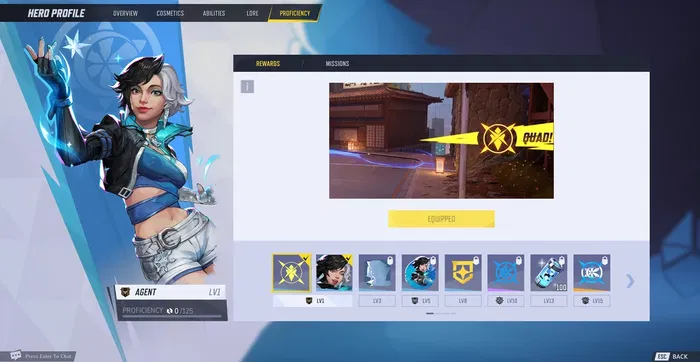
Building around what your team needs means playing more heroes, and every match on a hero builds its proficiency. Our guide to Marvel Rivals hero proficiency explains how the points and ranks work.
FAQ: Marvel Rivals Solo Queue Team Comps
What is the best Marvel Rivals team comp for solo queue?
For most solo-queue players, a balanced 2-2-2 composition with two Strategists is the safest starting point. It provides frontline stability, damage, healing, and enough flexibility to adapt to the enemy team. A sustain-focused composition is particularly forgiving because it does not require perfect coordination.
Is 2-2-2 still good in Marvel Rivals?
Yes. A balanced two-Vanguard, two-Duelist, and two-Strategist structure remains an excellent foundation for ranked play. However, 2-2-2 should be treated as a framework rather than a mandatory rule. If the lobby clearly favors another strategy, adapting your composition can be stronger.
Should I play two Strategists in solo queue?
Generally yes when your team composition supports it. Two Strategists provide greater redundancy and make the team less vulnerable to losing its only source of sustain. The exact value depends on the heroes selected and the enemy composition.
What is the best comp against brawl in Marvel Rivals?
A poke and range-oriented composition is generally the natural response to a brawl team. The goal is to damage the enemy before they reach effective fighting distance. Do not allow the enemy to start the fight on their terms.
What counters poke in Marvel Rivals?
Mobile heroes and dive-oriented compositions can punish poke when they successfully close the distance. The important part is timing. A dive that reaches the enemy together is dangerous. A dive where every player enters separately is usually not.
Is dive good for solo queue?
Dive can work, but it has a higher coordination requirement than sustain or brawl. If your teammates naturally play mobile heroes and follow engagements, dive becomes more attractive. If your team is constantly scattered, choose a composition that can create value independently.
Are Team-Ups important in solo queue?
Yes. Team-Ups can provide additional value when you happen to have compatible heroes on your team. The key is to use them opportunistically rather than forcing your entire composition around them. Because Team-Ups can be changed or rebalanced, always verify the current game state before building a strategy around a specific interaction. Official patch notes continue to document Team-Up changes.
What should I play if my teammates pick four Duelists?
Usually, do not become the fifth Duelist. Look at what the team actually needs. A Strategist can add sustain, while a Vanguard can create the space those Duelists need to deal damage. Your goal is not to have the most impressive scoreboard. Your goal is to create the strongest five-player system possible around your own pick.
Should I change my hero during a ranked game?
Yes, when the current pick is no longer solving the team’s problem. Good players do not switch simply because they lost one fight. They switch when the composition itself is failing. For example, if your team cannot survive the enemy dive, adding more damage may not solve the problem. A defensive or sustain-oriented adjustment may have much greater value.
Who is the newest hero in Marvel Rivals?
Gorr the God Butcher, a Duelist added with Season 10 on September 11, 2026. The Hood, a Vanguard, arrived before him with Season 9.5 on August 7, 2026, and the hero and Team-Up details in this guide date from that season.
Is this the current Marvel Rivals season?
No. Season 10 (Butcher's Blasphemy) replaced Season 9.5 on September 11, 2026, and Season 10.5 is scheduled for October 9. The composition templates in this guide still apply, but hero and Team-Up specifics come from Season 9.5, so check our Season 10 overview and the latest official patch notes.
What Marvel Rivals boost services does BoostingXP offer?
BoostingXP provides rank boost, win boost, achievement boost, and hero proficiency services. All services emphasize privacy, account safety protocols, and clear refund terms so customers can progress with confidence.
BoostingXP Gaming — Marvel Rivals guides, ranked meta analysis, and professional Marvel Rivals boost services.
This article is an independent informational publication. Marvel Rivals and related trademarks belong to NetEase Games / Marvel and their respective owners. Service availability, policies and pricing may change. Always review the current service page before ordering. Data reflects the Season 9.5 patch environment (August 7 balance + August 27 fixes) and may evolve with future balance patches. Official patch notes: August 7 Balance · Season 9.5 Patch · August 27 Fixes.