Marvel Rivals Duo Queue Guide: Best Hero Pairs and How to Climb
Duo queue is one of the most reliable ways to climb in Marvel Rivals, because two players on comms can fix a match that four randoms can't. This guide covers the four duo structures that work, hero pairs and Team-Ups worth building around, and how to carry your other four teammates.
Duo or solo, the ladder works the same way, and our Marvel Rivals ranked system guide covers the tiers and rank points.
What changed in Season 10: Season 10 (Butcher’s Blasphemy) went live on September 11, 2026. Gorr the God Butcher joined as a new Duelist, Scarlet Witch was reworked, and every Strategist now builds ultimate charge more slowly: healing converts at 65% instead of 70%, and damage at 50% instead of 55%. From Gold III up, Competitive uses an alternating ban phase in which each team bans three heroes. The duo structures and habits in this guide still apply; the Team-Up examples and numbers are the Season 9.5 baseline. Season 10.5 starts on October 9, so check its patch notes before relying on hero-specific details. Our Marvel Rivals Season 10 overview has the full patch summary.
Why Marvel Rivals Duo Queue Is One of the Most Reliable Ways to Climb
Marvel Rivals duo queue is one of the most reliable ways to make ranked matches more predictable. Not because duo queue gives players a hidden Ranked Point bonus — it does not. The advantage comes from something far more important: you control two players instead of one.
You know what your duo partner is going to play. You understand how they take fights. You can coordinate targets, cooldowns, ultimates, rotations, and disengages without relying on four random teammates to understand the same plan. In Marvel Rivals Season 9.5, that coordination matters even more because the Team-Up system introduced in Season 9 completely changed how hero combinations function.
Season 9 replaced the previous Team-Up structure with a ground-up redesign and introduced new Team-Up abilities across the roster. Season 9.5 continued refining that system while introducing The Hood as the season's new Vanguard hero. The official August 27 patch fixed several Team-Up interactions, including Angela's Odin's Unacknowledged, Doctor Strange's Psionic Vortex, and Cloak & Dagger's interaction with The Hood. For the full balance changes that shaped the Season 9.5 meta, see the official August 7 balance post and Season 9.5 patch notes.
That makes one thing clear: the best Marvel Rivals duo is not simply two high-tier heroes. It is two players whose heroes create a repeatable advantage. The strongest duo combinations usually provide at least two complementary functions:
- One player creates space while the other converts it.
- One player applies pressure while the other sustains it.
- One player controls the frontline while the other attacks from another angle.
- One player creates a target while the other finishes it.
- One player forces defensive cooldowns while the other punishes the response.
The goal is not to become two solo players on the same team. The goal is to become one coordinated two-player unit inside a six-player team. That mindset is the foundation of a consistent ranked climb.
What Makes a Good Marvel Rivals Duo?
A strong duo has four characteristics that separate it from two friends who simply queue together.
1. Complementary Roles
Your heroes should solve different problems. Two players who both want to dive the backline create redundancy. One player who creates the opening and another who converts it creates synergy.
2. Shared Positioning
You should be close enough to support each other without becoming vulnerable to the same enemy abilities. Stacking on the same pixel invites one ultimate or crowd-control ability to remove both of you.
3. Synchronized Cooldowns
Your important abilities should create opportunities for one another. When one player forces a defensive cooldown, the other should be ready to punish the window that follows.
4. A Clear Win Condition
Both players should understand what actually wins the fight. Is the goal to eliminate a specific support, to take space on the objective, or to force the enemy into a resource deficit? Clarity here prevents the most common duo failure: two players fighting completely different battles.
This is more important than simply having a powerful Team-Up. A Team-Up can give your heroes additional tools, but it does not automatically create a good composition. The question should always be: what does our duo allow us to do that two unrelated heroes cannot?
The Best Duo Queue Philosophy
The most reliable approach is to build your duo around roles and responsibilities, not just hero popularity. A strong duo should usually answer two questions:
- Who creates the opportunity? This could be a Vanguard initiating a fight, a Duelist creating pressure, or a Strategist enabling a teammate.
- Who converts the opportunity? This could be a Duelist finishing an exposed target, a Vanguard controlling space, or a Strategist keeping the engagement alive.
That creates a simple formula that works in almost any meta: Create pressure → force a response → punish the response → reset. This is far more repeatable than simply chasing eliminations, and it is the core of climbing Marvel Rivals ranked as a duo.
Best Duo Structure #1: Vanguard + Duelist
Vanguard + Duelist remains one of the strongest general-purpose structures for ranked duo queue. The Vanguard creates space. The Duelist converts that space into pressure. The duo can operate independently from the rest of the team while still creating an obvious opportunity for random teammates to follow.
How the Duo Should Play
The Vanguard should not simply run into five enemies. Instead, the Vanguard should create a controlled engagement. Once the enemy turns toward the Vanguard, the Duelist attacks from a favorable angle. The sequence becomes: Vanguard pressures → enemy turns → Duelist attacks → enemy uses defensive cooldowns → duo resets or finishes. This creates a two-player attack that is much harder to answer than a single player diving alone.
Doctor Strange + Hulk (Double Vanguard)
Doctor Strange and Hulk are both Vanguards, so strictly speaking this is a Vanguard + Vanguard duo (the objective-control row in the framework table below) rather than Vanguard + Duelist. It earns a mention here because it plays the same way: one player opens the fight and the other punishes the response. The August 7 balance update increased Doctor Strange's Daggers of Denak damage and projectile charges, while his Team-Up with Hulk received a cooldown reduction to Gamma Maelstrom from 8 seconds to 6 seconds. This creates layered frontline pressure. One player controls the main engagement. The second Vanguard creates a secondary threat. The enemy must decide where to spend defensive resources, and that decision creates opportunities for the rest of your team.
Doctor Strange + Scarlet Witch
Another important Season 9.5 interaction is Doctor Strange + Scarlet Witch. The August balance update modified Scarlet Witch’s Team-Up with Doctor Strange. Its base effect gives Mystic Burst on an 8-second cooldown for 8 seconds, allowing magic missiles to be fired without energy cost; the enhanced effect becomes a toggle. This pairing combines frontline control with sustained ranged pressure. Doctor Strange creates the space. Scarlet Witch exploits that space without needing to stand directly beside him.
Do not play this as “Strange walks forward and Scarlet Witch follows.” Instead: Strange controls the enemy’s attention. Scarlet Witch attacks from a safe secondary angle. If the enemy turns toward Scarlet Witch, Strange gets more freedom. If the enemy focuses Strange, Scarlet Witch gets a better damage window. That is how a duo should create pressure in the current Marvel Rivals meta.
Best Duo Structure #2: Strategist + Duelist (The Carry Duo)
If one player in your duo is mechanically stronger, Strategist + Duelist can be one of the most effective structures. The Strategist enables. The Duelist converts. This creates a natural feedback loop: the Duelist creates pressure, the Strategist keeps the Duelist active, the Duelist forces enemy cooldowns, the Strategist takes advantage of the resulting space. The enemy eventually runs out of resources. Then the duo finishes the engagement.
Mantis + Star-Lord
Mantis and Star-Lord were adjusted as a Team-Up in the Season 9 launch balance pass. That patch raised every Strategist's healing-to-Ultimate energy conversion from 60% to 70% (Season 10 has since cut it to 65%), while trimming Mantis's Healing Flower, including the enhanced healing from her Star-Lord Team-Up. Star-Lord should be the pressure source. Mantis should be the stabilizer. The mistake is treating Mantis as a permanent pocket healer. Mantis still has her own positioning requirements. Star-Lord should fight within a supportable range rather than diving into an impossible position. The strongest version of the duo repeatedly cycles: pressure → sustain → disengage → re-engage.
White Fox + an Aggressive Duelist
White Fox received an important Season 9.5 improvement. Her Kumiho Unleashed Ultimate’s energy cost was reduced from 4,800 to 4,300, and casting it automatically applies Blessed by the Nine to allies within 10 meters for three seconds. That makes her particularly interesting in a coordinated duo because her ultimate can provide a strong timed support window. Coordinate the timing: call “Next fight, I have ult.” Then your duo knows when to commit.
Best Duo Structure #3: Vanguard + Strategist (The Stability Duo)
If your goal is consistency rather than highlight clips, Vanguard + Strategist is one of the safest structures. The Vanguard controls space. The Strategist maintains the frontline. The rest of the team gets more freedom to play their preferred damage heroes. This is especially valuable when solo teammates are unpredictable. Your duo becomes the foundation of the composition.
Doctor Strange and Invisible Woman remain an excellent example of this structure because the pair can combine frontline control with sustain. Remember that the current Team-Up system was completely rebuilt in Season 9, so historical pairings should not be assumed to function identically. The general strategy still applies: Strange creates space, Invisible Woman keeps the team stable, and Duelists use that space to finish fights. A duo does not need to personally secure every elimination.
Best Duo Structure #4: Duelist + Duelist (High Skill, High Reward)
Double Duelist is not automatically bad. It is simply less forgiving. Two Duelists can create tremendous pressure when they attack from different angles. The biggest mistake is having both players attack the same target from the same direction. Instead, use crossfire.
Player A attacks from the front. Player B attacks from the side. The enemy turns toward Player A — Player B gets an opening. The enemy turns toward Player B — Player A gets an opening. That is significantly stronger than two Duelists standing together and shooting the same target.
A note on the two Team-Ups below: Gambit and Cloak & Dagger are Strategists, so Cyclops + Gambit and Moon Knight + Cloak & Dagger are technically Duelist + Strategist duos. They're listed here because they reward the same tempo-and-crossfire approach, with the Strategist adding pressure and sustain from a second angle instead of sitting behind the Duelist as a pocket healer.
Cyclops + Gambit (Duelist + Strategist)
The Season 9.5 balance update specifically improved Cyclops’s Team-Up with Gambit. Cyclops received increased cooldown reduction from Ricochet Force per Optic Blast hit, while his Gambit Team-Up increased the Concussive Beam Attack Frequency boost from 10% to 15%. This gives the pairing a natural pressure-based identity. Focus on maintaining offensive tempo rather than looking for one enormous all-in. Continuously pressure enemies and force them to spend resources. If the enemy retreats, take the space. If they use defensive cooldowns, remember it. If they re-enter without those cooldowns, punish them.
Moon Knight + Cloak & Dagger (Duelist + Strategist)
Season 9.5 also strengthened the Moon Knight and Cloak & Dagger Team-Up. The August 7 balance update reduced Luminous Moon’s cooldown from 15 seconds to 12 seconds when Moon Knight selects Cloak & Dagger. The Team-Up also increases the dash duration and distance, while its enhanced effect provides Moon Knight with healing after leaving the Phased state. This is a strong example of a duo that can combine mobility, pressure, escape, and sustain.
Moon Knight should not dive simply because Cloak & Dagger is nearby. Identify an actual target first. Then: Moon Knight enters → target is pressured → Cloak & Dagger supports → Moon Knight exits → duo resets. The ability to disengage is part of the strategy.
The Hood Changes the Duo Equation — and the New Season 9.5 Rule
Season 9.5 introduced The Hood as the new Vanguard hero. That matters for duo queue because new heroes can change how teams approach target selection and composition. The Hood should not automatically become part of every duo. New does not mean best. Evaluate the hero based on what your duo needs:
- Does The Hood provide the missing role?
- Does the duo have a clear follow-up?
- Can the other player protect or enable him?
- Does the pairing create a repeatable engagement?
- Can the duo still function if the Team-Up is unavailable?
The last question is particularly important. A good duo should remain useful even when the ideal Team-Up is not available.
Don’t Force a Team-Up
The Team-Up system is powerful. But forcing a Team-Up is one of the easiest ways to ruin your composition. Imagine your duo wants to activate a specific interaction, yet your team already has three Duelists and the Team-Up requires another Duelist. You lock it anyway. Now nobody wants to play Strategist or Vanguard. Your Team-Up may be strong — your team is not.
The correct priority is always: Team composition → player comfort → hero synergy → Team-Up optimization. Not Team-Up → everything else. This principle remains one of the most important lessons for consistent progress in the Marvel Rivals ranked ladder.
Season 9.5 Team-Up Examples Worth Building Around
Several current Team-Up interactions were specifically adjusted in the August 7 balance update and remain relevant after the August 27 fixes. Treat these as strategic tools rather than an immutable tier list. Always cross-reference the latest official Marvel Rivals patch notes.
- Doctor Strange + Hulk — Gamma Maelstrom cooldown reduction.
- Doctor Strange + Scarlet Witch — Mystic Burst interaction with different base and enhanced effects.
- Moon Knight + Cloak & Dagger — Lower Luminous Moon cooldown plus improved dash and healing effects.
- Cyclops + Gambit — Improved cooldown interaction and increased Concussive Beam frequency.
- Phoenix + Rogue — Increased Telekinetic Beatdown damage when selecting the Team-Up.
- Devil Dinosaur + Jeff the Land Shark — Longer Surf & Turf duration (4s → 5s) and increased ally healing (40 → 60).
Devil Dinosaur + Jeff the Land Shark is one of the most interesting current combinations for a coordinated Vanguard + Strategist duo and is particularly attractive for objective-focused teams. Treat the ability as part of your fight plan rather than simply a movement tool. Phoenix + Rogue creates an aggressive pairing that combines frontline durability with ranged pressure — again, the key is not to stand together but to make the enemy defend two different threats.
How to Play Around Random Teammates
This is where duo queue separates itself from a premade six-stack. You control two players. You do not control four. Stop building strategies that require all six players to execute perfectly. Build a strategy your duo can execute independently.
- If your random team is aggressive — support the aggression when it is reasonable. Do not blindly follow suicidal engagements.
- If your random team is passive — create controlled pressure. Do not take 2v5 fights.
- If your random team refuses to group — play around objective timing and isolated targets.
- If your random team has strong mechanics — enable them. Do not force yourself to be the carry simply because you queued as a duo.
Your random teammates should feel like additional resources, not required components. Your duo should be functional on its own. If a random teammate joins your engagement, excellent. If they do not, your duo should know when to disengage. This mentality dramatically reduces frustration and is a hallmark of successful Marvel Rivals ranked players.
When your partner is offline and you queue alone, the same thinking scales up to the whole team. Our guide to the best Marvel Rivals solo queue team comps covers how to build a working lineup around five strangers.
The Three-Step Hero Selection System
Before locking your heroes, ask three questions:
- What do we already have? Look at the other four players. Do you already have two Vanguards? Two Strategists? Too much damage?
- What does the team need? Fill the missing role. Your duo should make the composition easier to play.
- What is our win condition? Are you playing dive, brawl, poke, objective control, sustained frontline, or crossfire? Your heroes should support the same answer.
Do not pick the same job twice. Two heroes can have different names and still perform the same strategic job. Two aggressive Duelists may both want to dive the backline — that creates redundancy. Instead, choose different pressure profiles: one attacks from range, one from close range; one creates space, one converts it. That is synergy.
Duo Communication: Keep It Simple — and Master the Reset
You do not need professional-level communication. You need consistent communication. Use short calls:
- Engagement: “Go.” “Now.” “Follow.”
- Target: “Backline.” “Low.” “Support.”
- Defense: “Back.” “Reset.” “Don’t chase.”
- Rotation: “Left.” “High.” “Behind.”
- Ultimate: “I have ult.” “Wait for mine.” “One ult.”
Short communication is easier to understand during chaotic fights. The most important call is “Reset.” Most duo players understand how to attack. Fewer understand when to stop attacking. A reset call can save more games than an aggressive call. If the fight is becoming unfavorable, both players disengage, recover, regroup, then attack again. Do not turn one bad engagement into two deaths.
Season 9 introduced Regenerative Shields, giving certain heroes another reason to value controlled disengagement and re-entry. The mechanic allows chargeable shield capacity to regenerate after the hero avoids damage for a period of time. Sometimes leaving the fight is not giving up — it is reloading your defensive resources.
The Duo Fight Cycle, Ultimate Economy & Crossfire
A strong duo should think in four stages:
- Setup — Get into position.
- Pressure — Force the enemy to respond.
- Convert — Punish an exposed target or take the objective.
- Reset — Leave before the enemy counterattack becomes stronger.
Then repeat. This is the foundation of consistent ranked climbing in Marvel Rivals Season 9.5.
Ultimate Coordination
Your duo should know which ultimate starts the fight. Do not assume both players should press their ultimate simultaneously. Sometimes Player A uses ultimate → enemy defensive cooldowns are forced → Player B finishes. Other times Player B creates the opening → Player A follows. The order matters. Whenever possible, use the minimum number of ultimates required to win the fight. If one ultimate forces the enemy to retreat, save the second. That second ultimate may win the next fight. This creates better ultimate economy across the match.
Target Priority
Your duo should not automatically attack the lowest-health enemy. Instead, identify the isolated player, the player without defensive cooldowns, the enemy carrying the fight, or the enemy enabling everyone else. Sometimes the support is more important than the tank. Target selection should be based on fight impact, not scoreboard numbers.
Crossfire: The Secret Weapon of Duo Queue
Crossfire is one of the easiest advantages two coordinated players can create. Player A attacks from the front. Player B attacks from the side. Now the enemy has a problem. Turn left? Player A gains space. Turn right? Player B gains space. This creates pressure without requiring either player to take an unnecessary all-in. Coordination does not mean stacking. Good duo positioning is usually close enough to support, far enough to create another problem.
Duo Queue Mistakes That Destroy Climbing
- Instalocking two mains — Your mains may be individually strong but strategically redundant.
- Forcing a Team-Up — A Team-Up cannot repair a broken team composition.
- Chasing kills — If the enemy is retreating, take space instead.
- Following every bad engage — Your partner can make mistakes. Do not double the mistake.
- Ignoring random teammates — Your duo should anchor the team, not isolate itself.
- Using both ultimates automatically — One ultimate may be enough.
- Fighting while damaged — Reset.
- Changing heroes every time you lose — First identify why the strategy failed.
- Playing for damage numbers — Damage is not the objective. Winning fights and objectives is.
- Becoming predictable — Good opponents adapt. Change your timing.
Duo Queue Strategy by Rank
Bronze and Silver
Keep your plan simple. Focus on staying together, avoiding unnecessary deaths, winning obvious engagements, playing the objective, and learning basic target priority. Do not overcomplicate Team-Up interactions.
Gold and Platinum
Composition starts becoming more important. Your duo should begin thinking about role balance, target selection, ultimate economy, Team-Up value, and map positioning. This is where a structured duo can start creating a significant consistency advantage in Marvel Rivals ranked.
Diamond
Mistakes become expensive. Your duo needs a defined identity. Know who initiates, who follows, who protects, who calls targets, and when to reset. Do not spend half the match figuring it out.
Grandmaster and Above
At high ranks, mechanical skill alone becomes less reliable. Opponents recognize patterns. If you always dive at the same timing, they will prepare. If you always use the same ultimate combination, they will counter it. High-level duo queue is about tempo manipulation: sometimes engage immediately, sometimes wait, sometimes pressure without committing, sometimes force the enemy to move first.
Best Duo Pairing Framework
| Duo Structure | Strength | Difficulty | Best For |
|---|---|---|---|
| Vanguard + Duelist | Very High | Medium | Aggressive climbing |
| Strategist + Duelist | Very High | Medium | Carry-oriented duos |
| Vanguard + Strategist | Very High | Low–Medium | Consistent ranked play |
| Duelist + Duelist | High | High | Mechanical players |
| Vanguard + Vanguard | High | Medium | Objective control |
| Strategist + Strategist | Medium–High | High | Sustain-heavy teams |
The exact heroes should change with the patch. The structure is what remains valuable.
Final Marvel Rivals Duo Queue Checklist & Verdict
Before locking your heroes:
- Do we have complementary roles?
- Does our duo have a clear win condition?
- Does the Team-Up actually help us?
- Are we comfortable on both heroes?
- What role does the team need?
- Who initiates? Who follows? Who calls targets?
- Which ultimate comes first?
- When do we reset?
- How do we handle a random teammate refusing to follow?
- What is our backup composition?
Before each major fight: Are we together? Are we healthy? Are our cooldowns ready? Is our target isolated? Does the enemy have defensive cooldowns? Can we win the fight? If not, can we reset?
After each fight: Did we win space? Did we lose resources? Did we waste ultimates? Should we change targets? Should we reset? What does the enemy expect next?
Final Verdict
The best duo in Marvel Rivals is not necessarily the two heroes with the highest damage or the most popular Team-Up. It is the pairing that gives two coordinated players a clear, repeatable job. For most ranked players, the safest structures are Vanguard + Duelist for aggressive pressure, Strategist + Duelist for a carry-oriented duo, Vanguard + Strategist for stability and objective control, and Duelist + Duelist for mechanically strong players who understand crossfire.
And when a current Team-Up genuinely improves one of those structures, use it. The Season 9 Team-Up overhaul changed the system significantly, and Season 9.5 continued tuning individual Team-Up interactions. That pace of change is exactly why static tier lists go out of date so quickly, so check the latest official patch notes before you commit to a pairing.
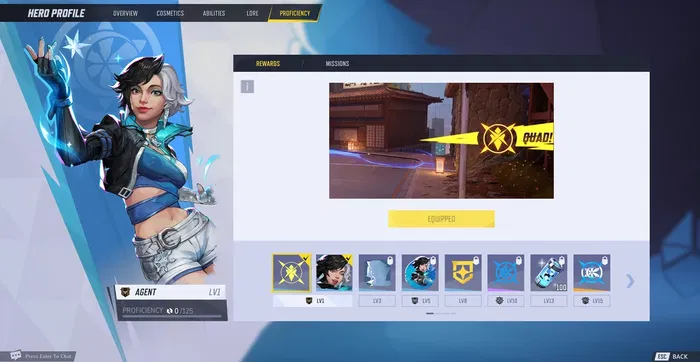
Every match on a new Team-Up hero also builds its proficiency, and our hero proficiency guide shows how the points add up and what each rank unlocks.
The strongest long-term strategy is not to memorize one pairing. It is to understand how to build a duo. Create the opportunity. Convert it. Reset. Repeat. Do not chase kills that do not matter. Do not force Team-Ups that damage your composition. Do not follow your partner into unwinnable fights. Do not play as two solo players. Instead, make your two players function as one coordinated unit. That is the real advantage of Marvel Rivals duo queue — and in Season 9.5, that advantage can be the difference between another frustrating ranked session and a consistent climb.
FAQ: Marvel Rivals Duo Queue
What is the best duo in Marvel Rivals?
There is no single permanently best duo. Vanguard + Duelist, Strategist + Duelist, and Vanguard + Strategist are the strongest general structures because they give the duo complementary responsibilities and make the remaining team easier to build.
What is the best Team-Up for duo queue?
The best Team-Up depends on your composition and the current patch. Current examples with official balance adjustments include Doctor Strange + Hulk, Doctor Strange + Scarlet Witch, Moon Knight + Cloak & Dagger, Cyclops + Gambit, Phoenix + Rogue, and Devil Dinosaur + Jeff the Land Shark. Always check the latest official Marvel Rivals patch notes for updates.
Is duo queue better than solo queue in Marvel Rivals?
Duo queue does not provide a special Rank Score multiplier. Its advantage comes from coordination. Two players can communicate targets, cooldowns, positioning, rotations, and ultimate timing more reliably than a solo player can coordinate with five strangers.
Should two duo players play the same role?
Usually no. Role overlap can work, but complementary roles generally create more reliable team compositions. Double Duelist and double Vanguard can work when both players understand their different responsibilities.
Should I always activate a Team-Up?
No. Never sacrifice a good team composition simply to activate a Team-Up. Hero comfort, team balance, and a clear win condition should come first.
How should a duo communicate?
Keep calls short and actionable. Use terms such as Go, Back, Reset, Target, Left, Right, Ult, Hold, and Follow. The objective is to communicate decisions, not narrate the entire fight.
How do I climb faster with a duo?
Build a repeatable strategy, reduce unnecessary deaths, coordinate engagements, manage ultimates, prioritize objectives, reset losing fights, and adapt your heroes to the rest of the team. Combining solid duo play with optional professional support from a Marvel Rivals rank boost can accelerate progress while you improve.
Who is the newest hero in Marvel Rivals?
Gorr the God Butcher, a Duelist added with Season 10 on September 11, 2026. The Hood, a Vanguard, arrived before him with Season 9.5 on August 7, 2026, and the hero and Team-Up details in this guide date from that season.
Is this the current Marvel Rivals season?
No. Season 10 (Butcher's Blasphemy) replaced Season 9.5 on September 11, 2026, and Season 10.5 is scheduled for October 9. The duo structures and habits in this guide still apply, but the Team-Up numbers come from the Season 9.5 patch, so check our Season 10 overview and the latest official patch notes before relying on them.
What Marvel Rivals boost services does BoostingXP offer?
BoostingXP provides rank boost, win boost, achievement boost, and hero proficiency services. All services emphasize privacy, account safety protocols, and clear refund terms so customers can progress with confidence.
BoostingXP Gaming — Marvel Rivals guides, ranked meta analysis, and professional Marvel Rivals boost services.
This article is an independent informational publication. Marvel Rivals and related trademarks belong to NetEase Games / Marvel and their respective owners. Service availability, policies and pricing may change. Always review the current service page before ordering. Data reflects the Season 9.5 patch environment (August 7 balance + August 27 fixes) and may evolve with future balance patches. Official patch notes: August 7 Balance · Season 9.5 Patch · August 27 Fixes.