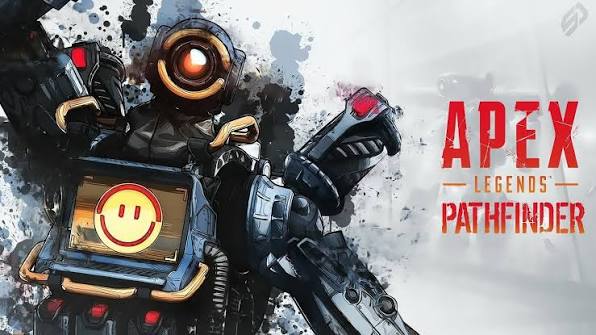
Pathfinder is the Apex Legends pick for solo repositioning: the grapple gets you to off-angles and high ground before a fight and out of one when it goes wrong. This guide covers grapple technique, when the zipline actually helps your squad, and how Pathfinder fits into ranked rotations.
Pathfinder Playstyle at a Glance
The strongest Pathfinder players treat mobility as space control. They create off-angles, take useful high ground, reset when fights turn bad, and rotate the squad before the ring forces them into the open. The core rule is simple: move because it creates an advantage, not because the cooldown is available.
What Makes Pathfinder Different?
Pathfinder is fundamentally a space-control and mobility Legend. His kit influences where a fight happens and how quickly a squad can move through the map.
His most important strengths are:
- Exceptional personal mobility
- Rapid access to high ground
- Strong vertical movement and repositioning
- Ability to create unexpected angles
- Fast disengagement and chase potential
- Team-wide rotation utility via the Zipline Gun
- High outplay potential in skilled hands
Mobility does not automatically make every fight favorable. A grapple into isolation, a zipline that exposes the squad, or high ground with no cover can turn one of the most mobile Legends into an easy target.
Pathfinder’s Core Playstyle
The most effective Pathfinder approach combines three ideas:
- Create angles — Attack from positions enemies are not prepared to defend.
- Control space — Take or contest important areas of the map.
- Reset quickly — Disengage faster than the enemy expects when a fight turns bad.
Think of yourself as the player who changes the geometry of the fight. You can move vertically, appear from unexpected directions, create or close distance, force enemies to look away from teammates, and reposition the entire squad when an area becomes dangerous.
Primary Style: Aggressive Entry Fragger
Aggressive Pathfinder focuses on creating pressure and forcing opponents to react. Aggressive does not mean reckless. The goal is not to be the first player to take damage—it is to be the first player to create an advantage.
A strong Pathfinder entry can:
- Force an enemy off cover
- Create a crossfire
- Secure useful high ground
- Isolate a target
- Force defensive cooldowns
- Create space for teammates
- Turn a 3v3 into a favorable engagement
The difference between aggressive and reckless is decision-making. Preserve connection to the squad. Arriving five seconds ahead of teammates often turns a team fight into a solo fight.
Play for Off-Angles and High Ground
An off-angle is a position that pressures enemies from a different direction than your teammates without completely abandoning the squad. This is one of the highest-value concepts for Pathfinder.
Example: a teammate fights from the front while you grapple to elevated cover nearby. The enemy now faces two problems—they cannot comfortably deal with both at once. That is how Pathfinder creates value without necessarily getting the knock.
Goals of a good off-angle
- Force the enemy to move
- Create a crossfire
- Deny a rotation
- Gain vision over a key area
- Threaten a flank
- Give the team better shooting opportunities
- Create an escape route
High ground is more than height
Good high ground provides cover, visibility, multiple escape routes, useful shooting angles, and control over movement. Bad high ground leaves you exposed, isolated, easy to focus, or trapped by multiple enemy angles.
Before grappling up, ask three questions:
- Can I fight from here? (Useful line of sight)
- Can my teammates support me?
- Can I leave?
Master the Grappling Hook
The Grappling Hook is Pathfinder’s defining mechanic. Basic grapples are easy; consistent, purposeful use is harder. Destination matters more than distance. A long grapple that leaves you exposed is often worse than a short grapple that places you behind cover.
Use the grapple to:
- Enter or escape a fight
- Reach high ground or cross open space
- Dodge incoming damage and break line of sight
- Chase a weak opponent
- Create an unexpected angle
- Reposition around cover or reach resources
Grapple into cover, not just toward enemies
Grappling directly at an opponent creates a predictable trajectory. Prefer grappling toward cover, high ground, a side angle, a nearby building, a teammate, or a route that breaks line of sight. The best grapple is often the one the enemy does not expect.
Don’t grapple just because you can
Unnecessary movement is one of the most common Pathfinder mistakes. Before using the grapple, ask: what problem am I solving? If the answer is unclear, holding the ability is often better. The grapple is also an emergency button—spending it casually can leave you with no reliable escape.
Pathfinder as a Passive Anchor
Pathfinder does not have to be a constant entry. When the squad already has strong entry players, he can function as a controlled anchor: holding angles, maintaining vision, watching rotations, providing ranged pressure, protecting the retreat, and punishing enemy movement.
An effective anchor position should provide cover, information, escape options, team connection, and meaningful pressure. If a spot gives only one of these, it is often not worth holding.
Delayed aggression
One of the strongest habits is re-engaging after damage rather than pushing immediately. Let teammates create damage first. Once an opponent is weak or forced off cover, close the distance with mobility while they recover. This reduces unnecessary risk while still allowing aggressive conversion.
Movement and Positioning
Movement is only valuable when combined with positioning. A mechanically gifted Pathfinder can still lose fights through poor decisions. Your movement should constantly answer:
- Where is my cover?
- Where is my team?
- Where is the enemy and where can they retreat?
- Where can I escape?
- Which angle gives the most pressure?
- Which position controls the next rotation?
In ranked, avoid rotating blindly through the middle of two active fights. Prefer the outside edge, high ground, cover, a wider route, or a position that lets you observe before committing. Pathfinder’s mobility exists so you can choose safer routes—use it.
For third parties, timing matters more than speed. Listen for knockdowns, shield breaks, revives, healing, and ultimate usage. Arrive when the surviving team is vulnerable, not necessarily when the first shots are fired.
Zipline Gun: Team Utility First
The Zipline Gun is more than personal mobility. It can give the whole squad access to high ground, buildings, safer terrain, escape routes, or aggressive entry paths. Before placing one, consider the full route: start and end points, who can use it (including enemies), exposure, and whether it solves a real positioning problem.
When to zipline for rotation
- Moving toward strong final-zone terrain
- Crossing a dangerous gap
- Reaching valuable high ground
- Escaping an unfavorable position
- Connecting the squad to a better building
- Creating a faster route around danger
A rotation is not simply about getting somewhere—it is about arriving somewhere useful. For aggressive pushes, a zipline can shorten an exposed approach, but do not assume a direct line toward an enemy team is always correct.
Pathfinder Across Fight Ranges
Close range
Pathfinder’s large model makes close-range cover and unpredictability critical. Use cover aggressively, keep the grapple available when possible, change elevation, break line of sight, and avoid predictable strafing. The goal is to make the next position hard to read.
Mid range
Mid-range is where off-angle potential shines. Hold an angle, apply damage, disengage, reposition, and reappear from another direction. Forcing opponents to repeatedly adjust aim and positioning creates pressure without constant full commits.
Long range
At long range, preserve the grapple for meaningful position upgrades—better sightlines, stronger cover, elevated terrain, or safer rotations—then use ranged pressure to force movement. Do not spend mobility on small, low-value shifts.
Pathfinder in Ranked Apex Legends
Ranked rewards decision-making more than mechanical highlights. A Pathfinder climbing the ladder should focus on consistent positioning, smart rotations, damage efficiency, team coordination, fight selection, escape routes, and end-game positioning.
Mobility is especially valuable when the ring limits space. Helping the team reach strong positions before other squads arrive can be more valuable than taking an unnecessary fight. For broader ranked fundamentals, see the Apex rotation and positioning guide.
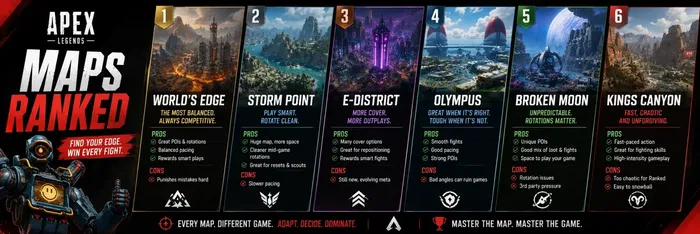
Pathfinder is also one of the two S-tier Legends in our Season 30 ranked tier list, and his mobility pays off on all three Split 2 maps. Our guide to the best Legends for each ranked map covers how his value shifts between World's Edge, Olympus and Broken Moon.
The numbers back that up: on 20 October 2026 Pathfinder was level with Loba as the most-picked legend among Master and Predator players, at 17.3% each, according to Apex Legends Status.
Early game
Prioritize resources and information. Do not hunt fights only because Pathfinder can escape. Look for good loot, team positioning, nearby threats, rotation options, and strong terrain. If a fight happens, create favorable angles rather than blind chases.
Mid game
Rotation potential becomes central. Watch ring movement, enemy rotations, high-value terrain, choke points, and third-party risk. Move before you are forced to move. Proactive rotations are one of Pathfinder’s biggest ranked strengths.
Late game
Control limited space. Every piece of cover matters. Use the grapple for better angles, escapes, final-zone terrain, or pressure on isolated players. Use the zipline carefully—one bad placement can expose the entire squad. Ask where teams will be forced to move, which position offers cover and escape, and whether another team can attack from above or behind.
Pathfinder Team Coordination
Pathfinder becomes significantly stronger when teammates understand the intent behind the movement. Communicate clearly:
- “I’m taking height.”
- “I’m creating an off-angle.”
- “I’m backing out.”
- “We can rotate through here.”
Vague calls like “I’m grappling” leave the squad guessing. Clear communication keeps the triangle of You → Enemy → Teammates intact and prevents Pathfinder from becoming isolated.
The Most Common Pathfinder Mistakes
- Grappling without a purpose — Movement is not automatic value.
- Overextending — Reaching positions the squad cannot support turns team fights into solos.
- Using the grapple too early — It is also an emergency escape.
- Ignoring cover — Mobility does not replace cover.
- Taking bad high ground — Height without cover or support is often a liability.
- Fighting alone — Apex remains a team game; mobility should create squad advantages.
- Predictable grapples — Direct lines toward enemies become readable.
- Chasing too far — A damaged enemy is not always a free kill if the chase leaves the team or enters another squad.
How to Practice Pathfinder
Deliberate practice beats volume alone. Work specific skills:
Pathfinder Decision-Making Framework
Before moving, run a short checklist:
- Objective — Damage, high ground, rotation, escape, flank, or information?
- Enemy control — Their cover, height, and angles.
- Team control — Where teammates can support you.
- If I fail — Death with no recovery is often too aggressive.
- If I succeed — Isolated enemy, dominant high ground, or safe rotation may justify the risk.
Aggressive Pathfinder focuses on off-angles, entry pressure, chasing weak targets, and creating openings. Anchor Pathfinder focuses on information, high-ground control, ranged pressure, team support, and re-engagement. The best players switch between the two based on squad composition, terrain, ring, resources, and whether the team already has an advantage.
The same questions apply to every legend; our guide to ranked decision-making turns them into a routine for ranked.
Pathfinder Playstyle FAQ
What is the best Pathfinder playstyle in Apex Legends?
The strongest style depends on the situation. Pathfinder works well as an aggressive entry and off-angle player or as a more patient anchor who controls high ground, provides ranged pressure, and supports rotations.
Is Pathfinder good for aggressive players?
Yes. His mobility suits players who create off-angles, take high ground, chase weakened enemies, and reposition quickly. Discipline in positioning and timing still determines success.
How should I use Pathfinder’s Grappling Hook?
Use it to create a meaningful positional advantage: cover, high ground, off-angles, escapes, isolated chases, or mid-fight repositioning. Destination matters more than maximum distance.
Should Pathfinder grapple directly into enemies?
Usually no. Prefer cover, off-angles, or positions that set up a crossfire with teammates. Direct trajectories are easier for experienced opponents to track.
How do I improve Pathfinder movement?
Practice specific mechanics: short grapples between cover, vertical reaches, pre-planned escapes, combat repositioning (damage → break LOS → re-engage), and squad-usable routes.
Is Pathfinder better as an entry fragger or anchor?
He can do both. Use mobility for entry pressure and flanks when the squad needs openings; use high-ground control and rotation support when teammates already create front pressure.
How important is high ground for Pathfinder?
High ground helps vision and angles, but height alone is not enough. Strong positions also need cover, team support, useful sightlines, and an escape route.
Should I save the grapple for escaping?
Not every grapple must be saved, but understand the risk of spending it offensively. When a push is likely, keeping an escape option is often the higher-value choice.
How can Pathfinder help his team?
Create off-angles, secure high ground, scout and control rotations, apply pressure, escape bad spots, and place ziplines that solve real positioning problems for the whole squad.
What is the biggest Pathfinder mistake?
Using mobility without a clear purpose. The abilities are strongest when they create a specific advantage rather than simply increasing movement speed or distance.
How should Pathfinder play in ranked?
Prioritize smart rotations, strong positioning, team coordination, selective fights, and efficient mobility. Reaching strong ring positions early often outweighs unnecessary fights.
How do I become a better Pathfinder player?
Focus on three areas: mechanical grapple control, positional decision-making, and fight awareness—where to move, when to move, and how that movement changes the enemy’s options.
Conclusion: Master the Movement Machine
Mastering Pathfinder is not about being the fastest player in the lobby. It is about knowing where to be, when to move, and why the movement matters. The Grappling Hook changes your position rapidly; the Zipline Gun gives the squad access to important terrain. Together they let Pathfinder influence fights before they fully form.
Play aggressively when you have an advantage. Slow down when the position is vulnerable. Use the grapple to create opportunities rather than unnecessary movement. Protect escape options. Keep the team connected. Always consider what your movement forces the enemy to do next.
When mechanical grapple control combines with strong positioning, awareness, and team coordination, Pathfinder becomes a tool for controlling the battlefield—not just a mobile Legend.
BoostingXP Gaming — Apex Legends guides, ranked strategy, legend playstyles, and professional Apex Rank Boost services.
This article is an independent informational publication. Apex Legends and related trademarks belong to Respawn Entertainment / Electronic Arts and their respective owners. Service availability, policies and pricing may change. Always review the current service page before ordering.